
Latest field notes
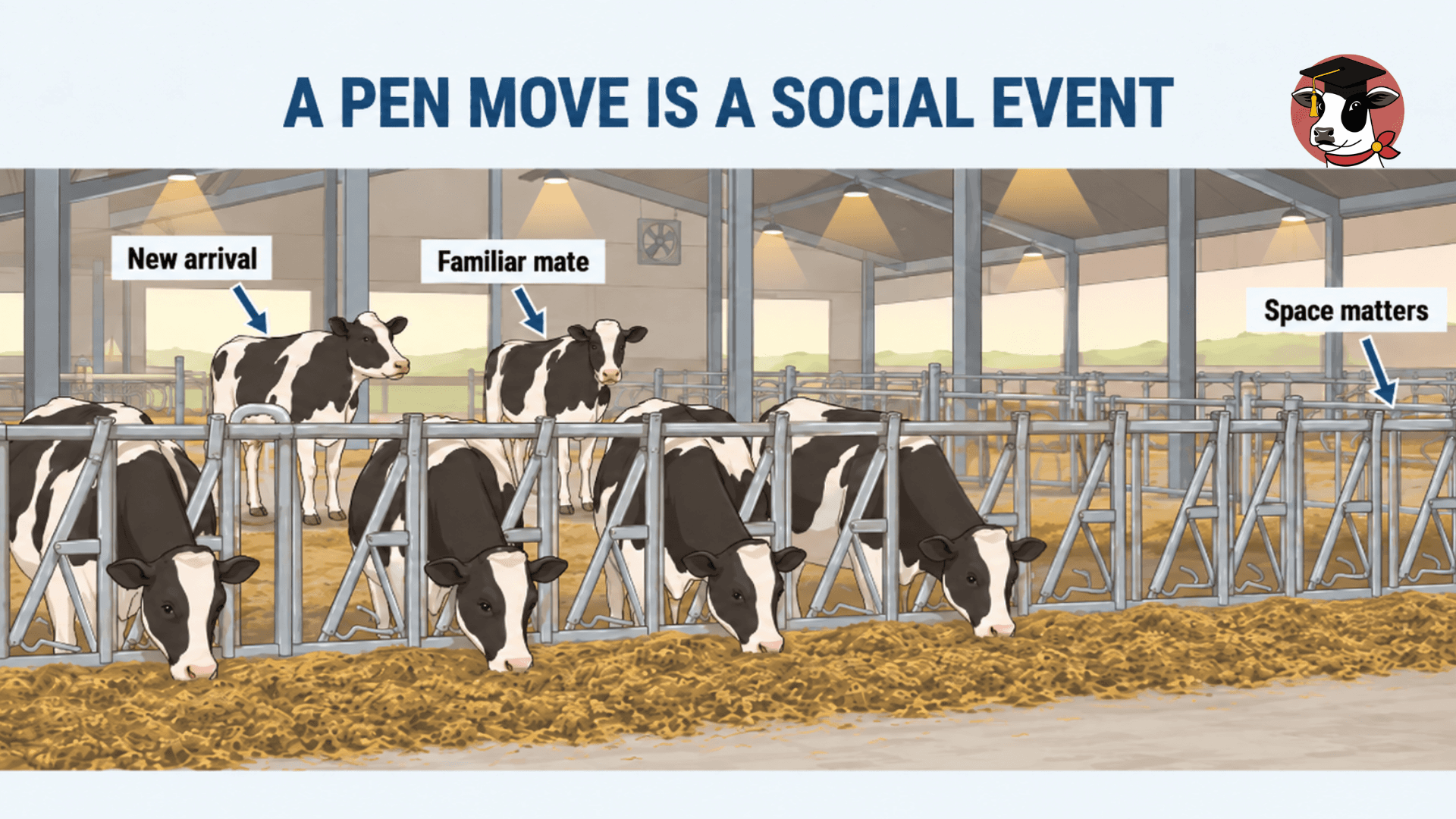
- Knowledge level in this topic: Intermediate. Barn-side working knowledge in this topic: checks, pairing, and what to do next.Transition · The transition cowA Pen Move Is a Social EventMoving a cow puts her into a group with its own social order; for hours to days she may be displaced more and eat less, so plan how often, when, with whom and into how much space cows move.
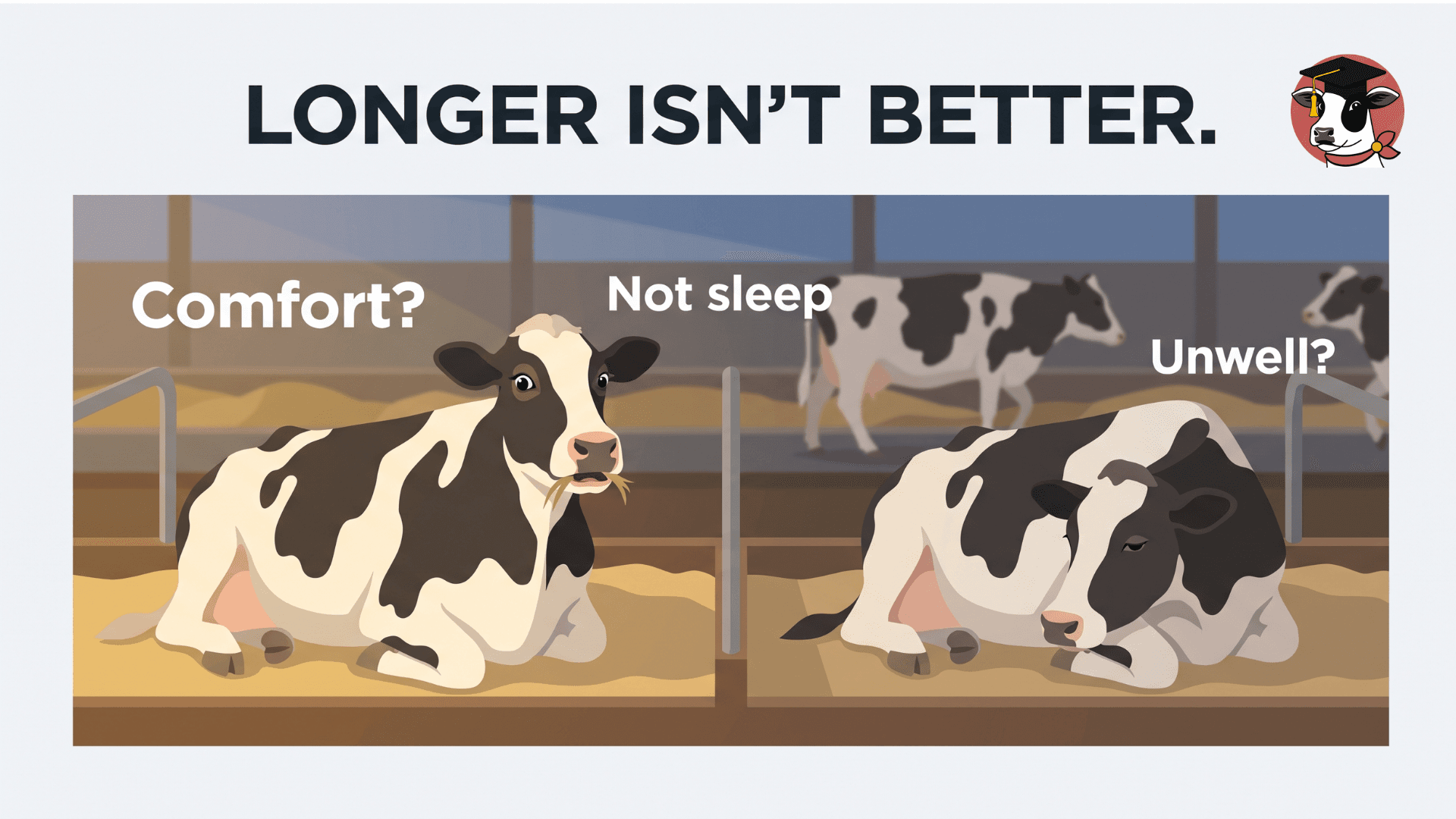 Knowledge level in this topic: Intermediate. Barn-side working knowledge in this topic: checks, pairing, and what to do next.Barn · Stocking & cow flowLying Longer Is Not Always BetterAbout 12 hours of lying a day is a common design goal, but a long lying day can mean comfort or illness, and lying hours are not sleep.
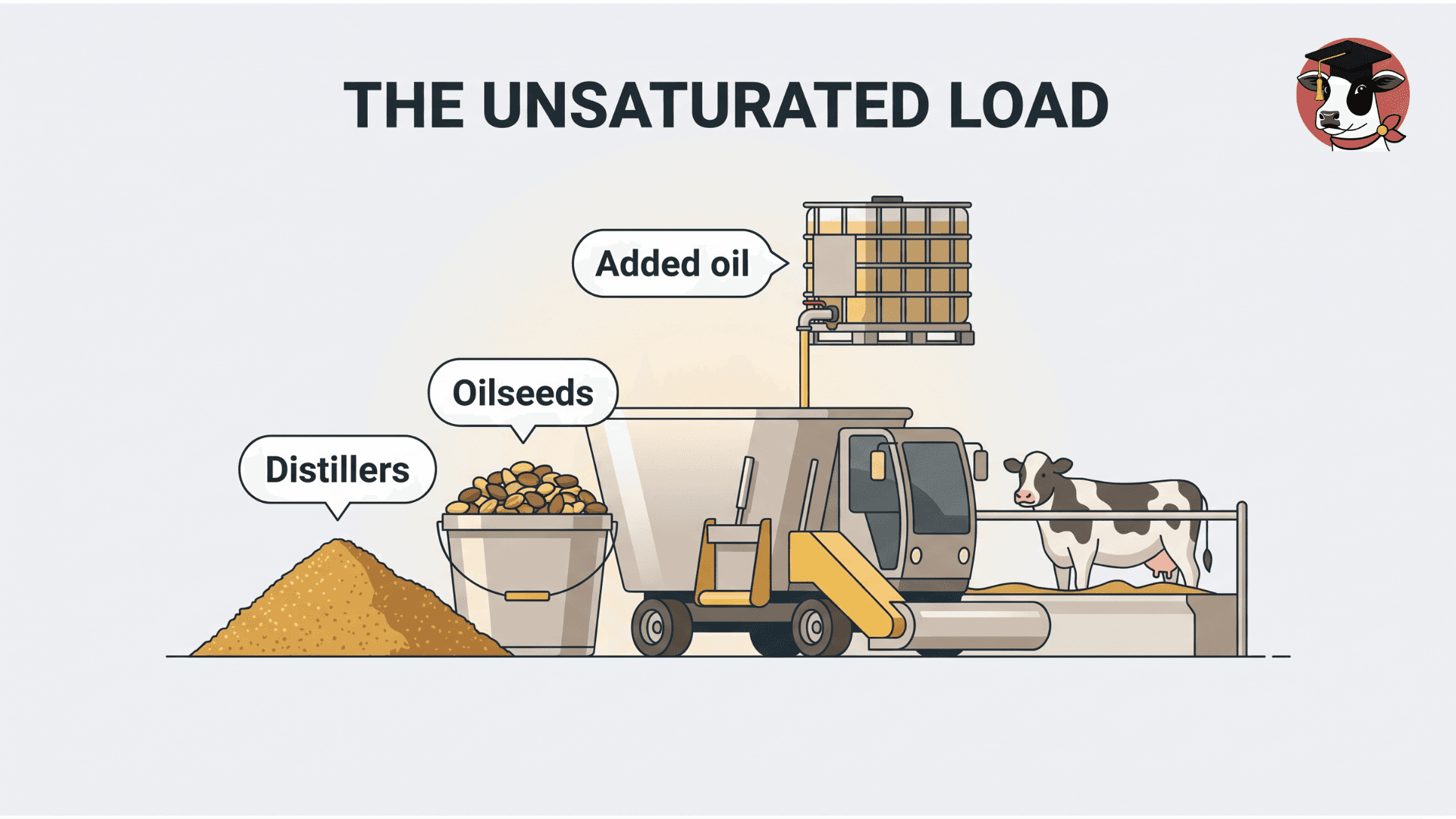 Knowledge level in this topic: Advanced. Mechanism and stacked risk in this topic — assumes the first-pass frame.Rumen · Starch load & SARACount the Unsaturated Fat, Not Just the FatFat on the feed tag is not the count that matters. The unsaturated fat the rumen sees, from every ingredient, can stack with starch and weak fiber.
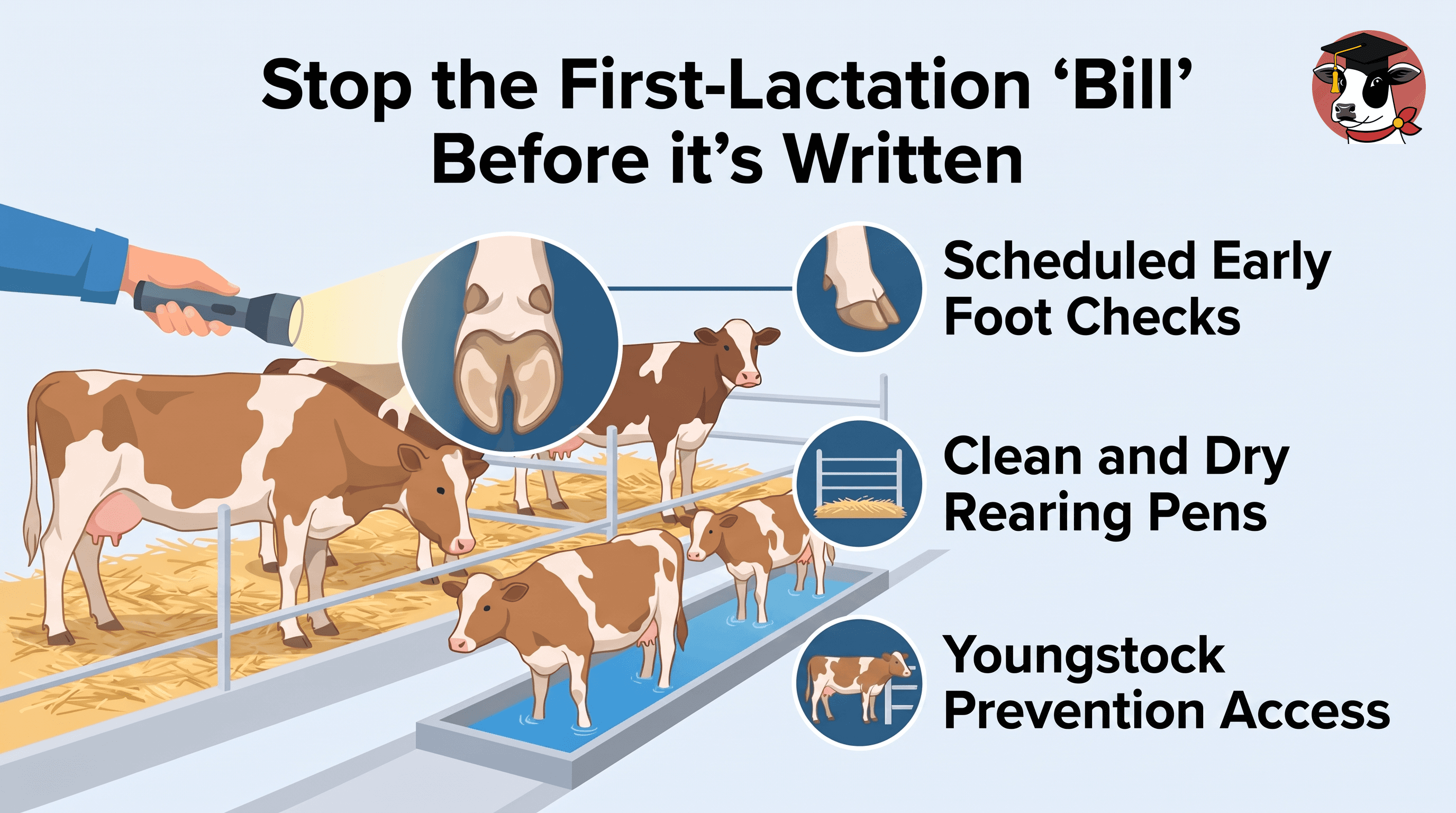 Knowledge level in this topic: Intermediate. Barn-side working knowledge in this topic: checks, pairing, and what to do next.Hoof · From lameness to lesionDigital Dermatitis in Heifers: Prevention Before First LactationHeifers that meet endemic digital dermatitis before first calving pay for it in early lactation — prevention in the rearing pen beats chasing first-lactation ulcers after they hit the parlor.
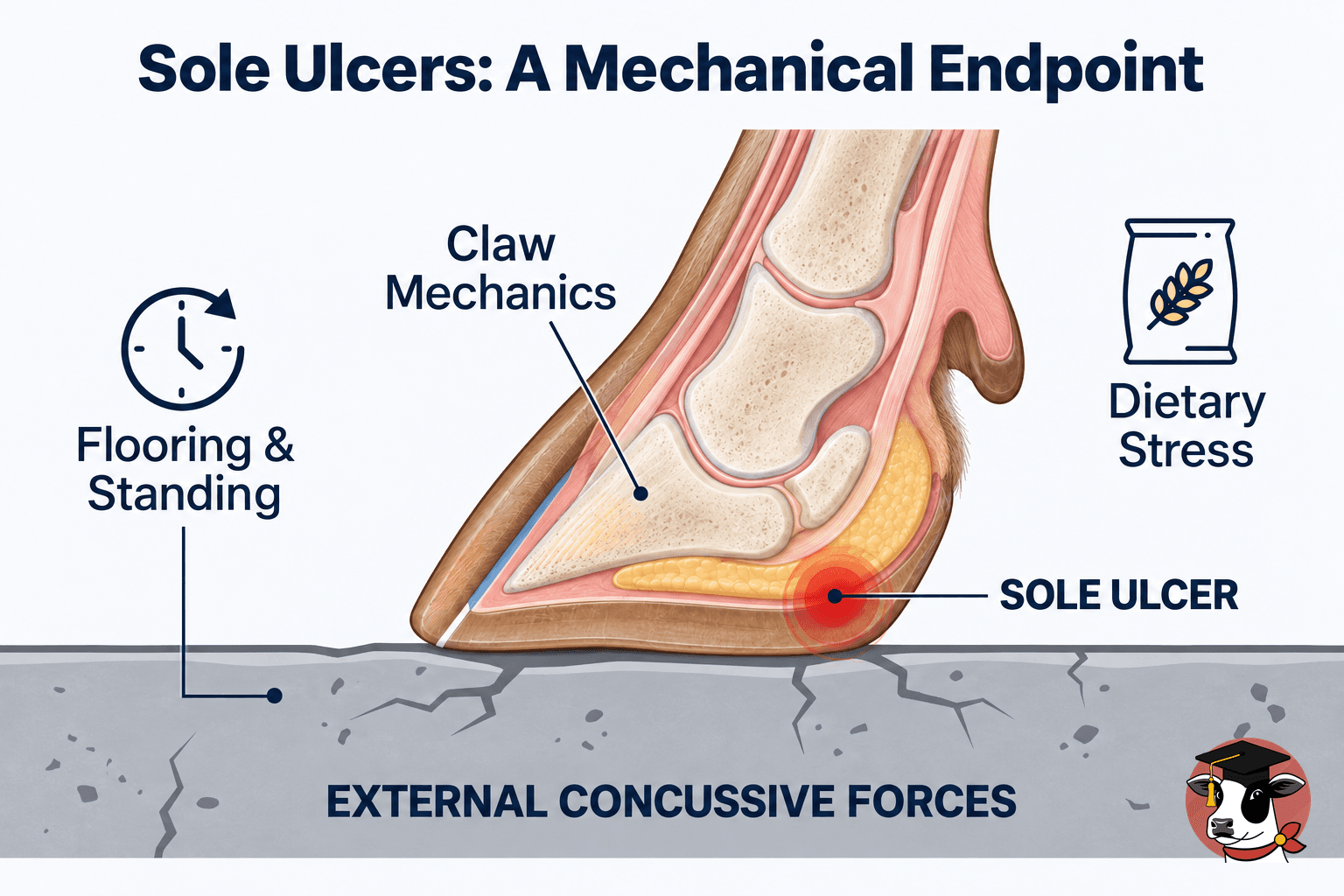 Knowledge level in this topic: Advanced. Mechanism and stacked risk in this topic — assumes the first-pass frame.Hoof · Claw-horn lesionsSole Ulcers, Laminitis, and Diet: Separating Evidence from AssumptionSole ulcers get blamed on “too much grain” more often than the evidence supports — separate diet risk from flooring, standing time, and claw mechanics before rewriting the ration.
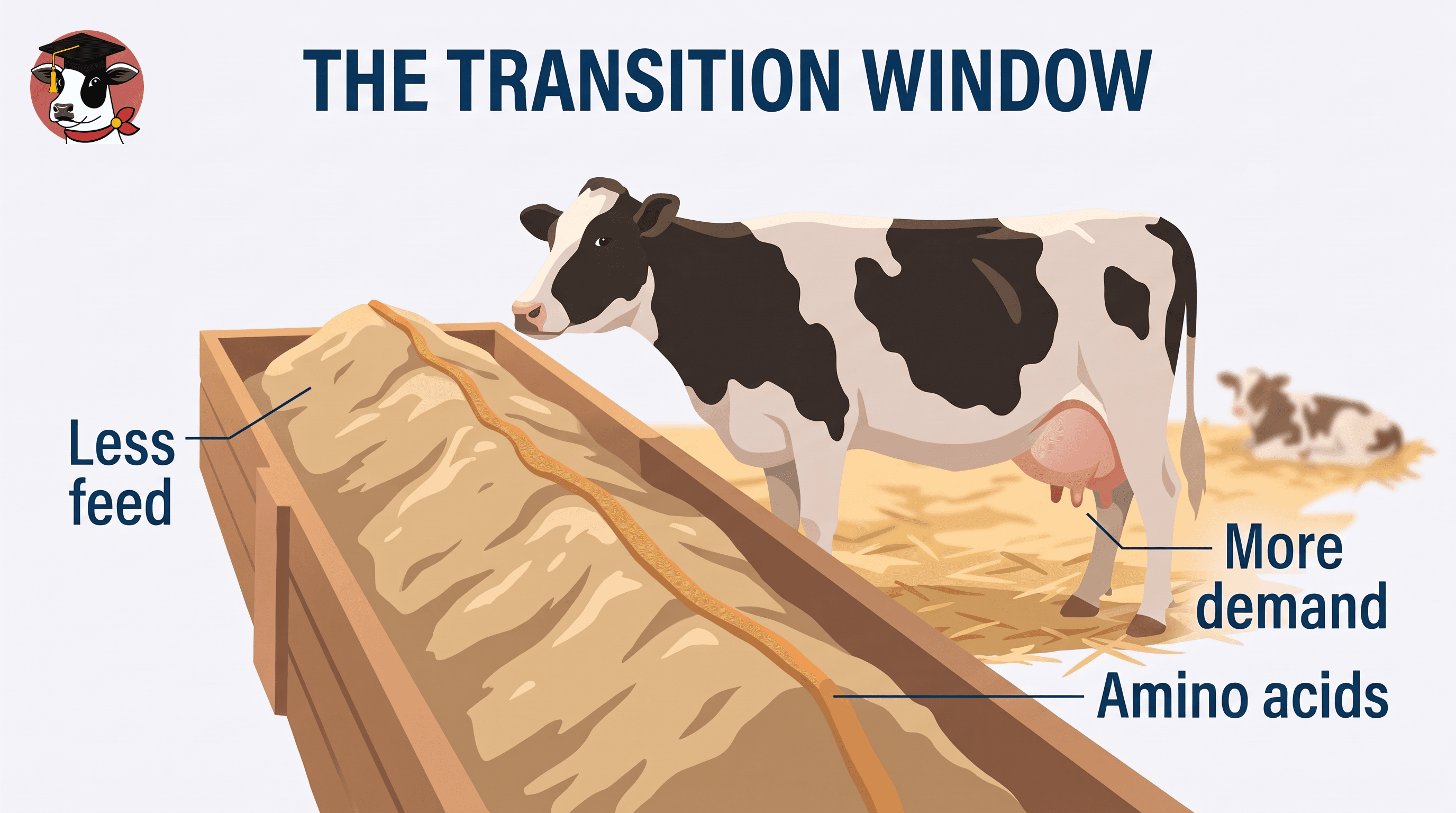 Knowledge level in this topic: Advanced. Mechanism and stacked risk in this topic — assumes the first-pass frame.Transition · The transition cowAmino Acids in the Transition WindowAround calving, a cow eats less just as her udder, liver and immune system pull hard on amino acids. In trials, extra methionine from about three weeks before calving has mostly raised milk protein afterward, while the health benefits are less certain.
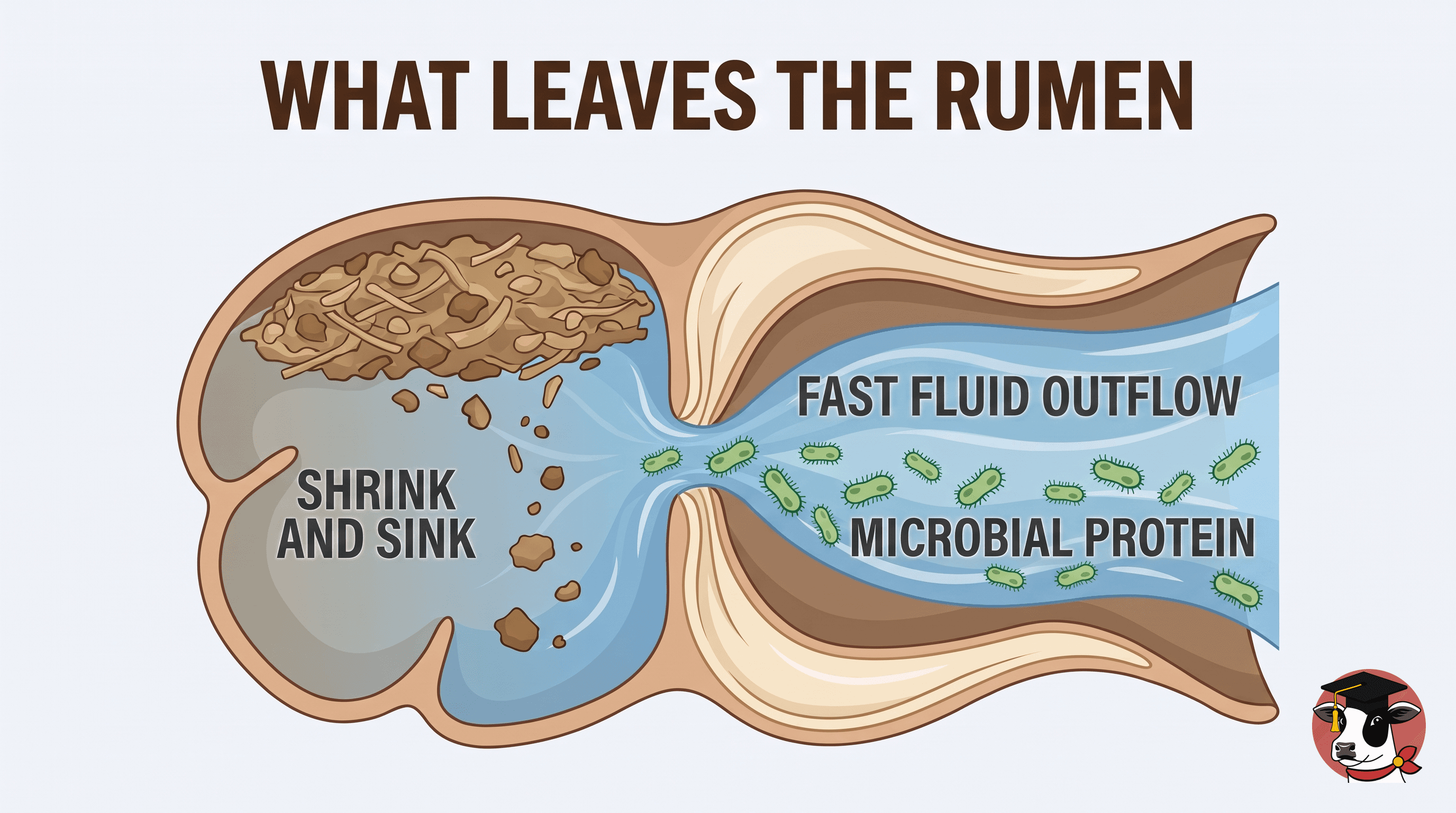 Knowledge level in this topic: Intermediate. Barn-side working knowledge in this topic: checks, pairing, and what to do next.Rumen · Inside the rumenWhat Leaves the RumenLiquid and solid digesta leave the rumen on different clocks. Fast fluid outflow harvests microbial protein, while fiber particles leave only after they shrink and sink.
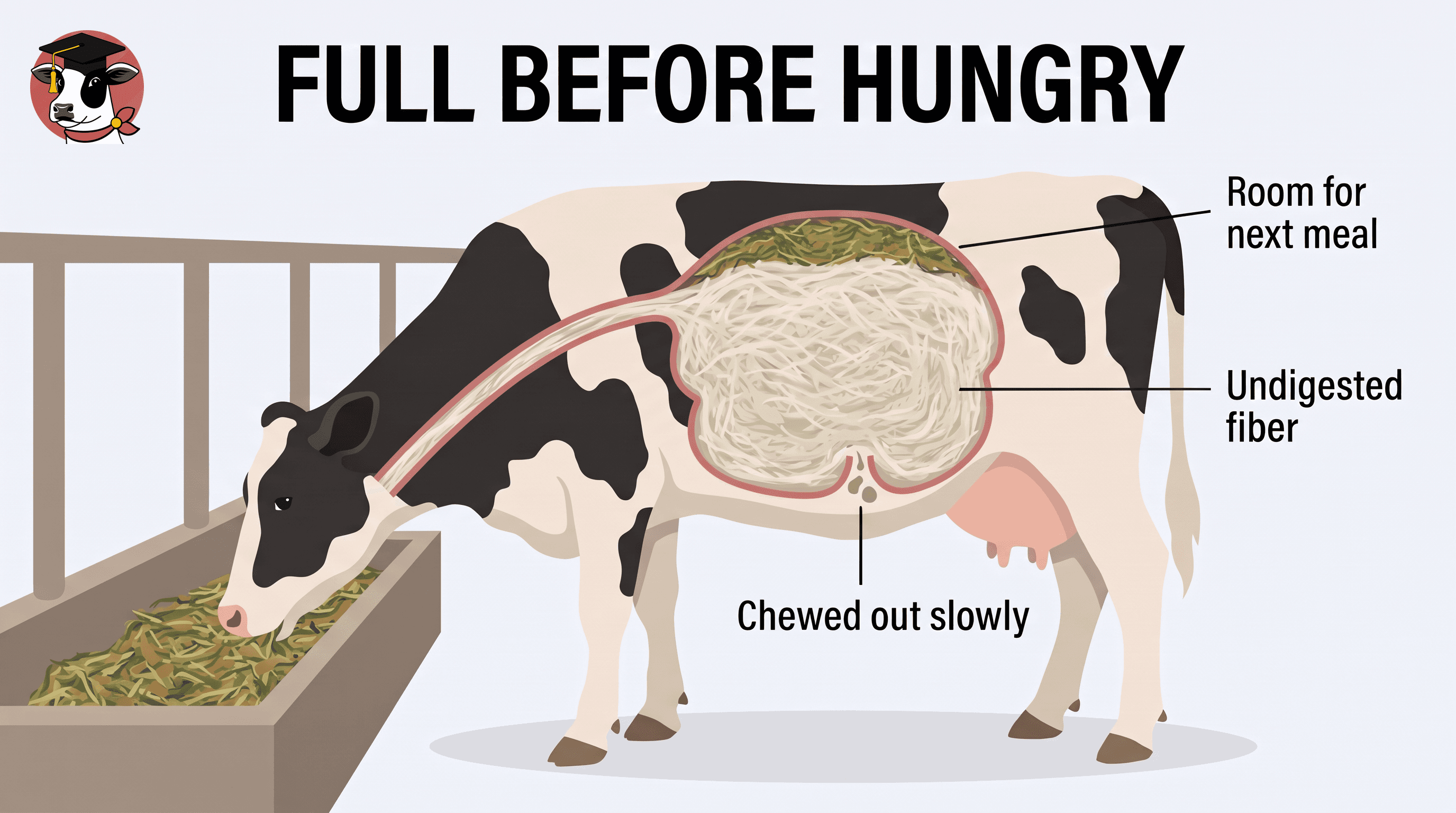 Knowledge level in this topic: Intermediate. Barn-side working knowledge in this topic: checks, pairing, and what to do next.Rumen · Physically effective fiberuNDF240 Sets the Fill LimitNDF tells you how much cell wall a forage carries. uNDF240 estimates how much of it the rumen cannot digest, and that fraction takes up space until it is chewed small enough to leave. In high-producing cows, it can cap how much they eat.
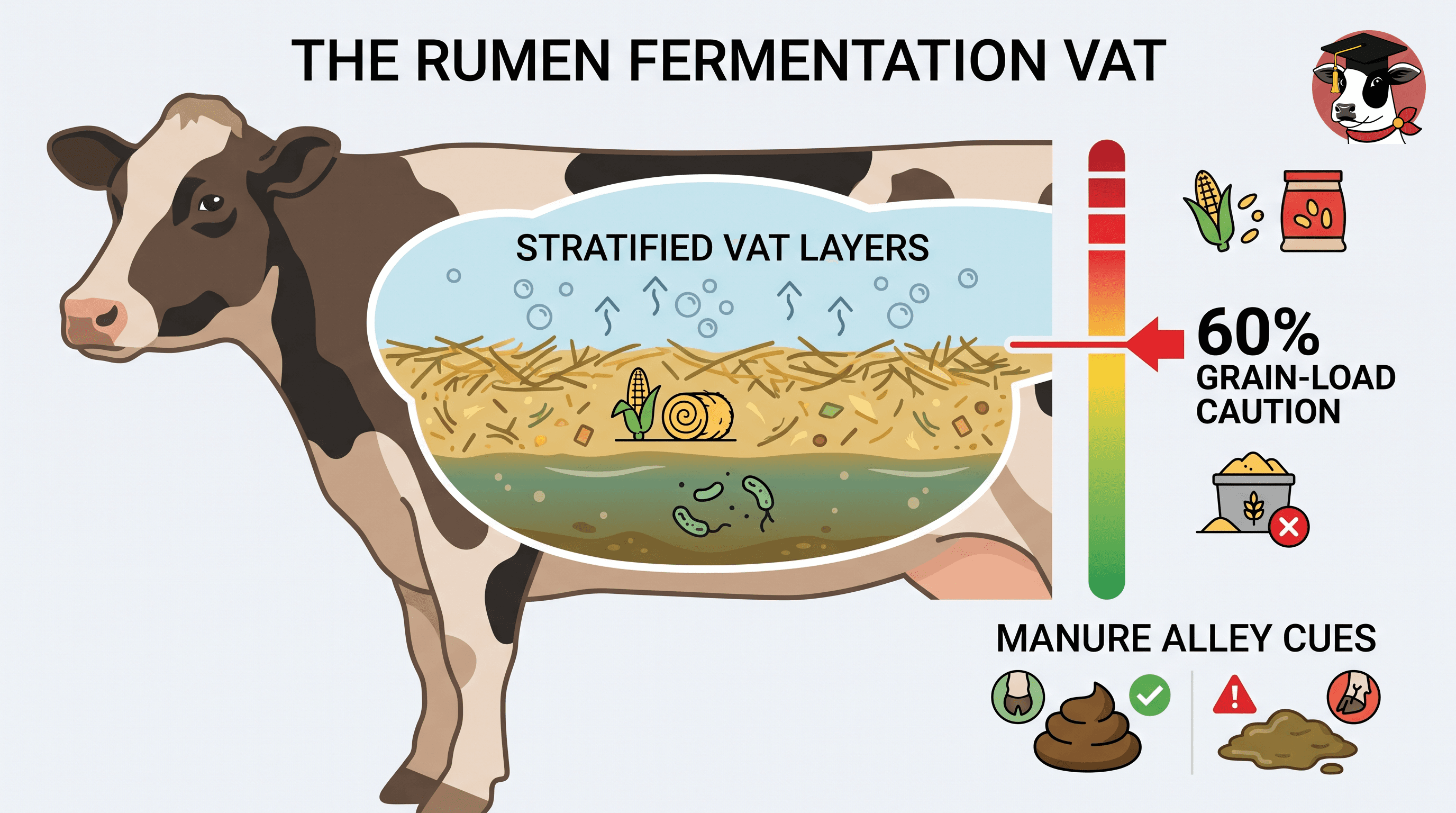 Knowledge level in this topic: Intermediate. Barn-side working knowledge in this topic: checks, pairing, and what to do next.Rumen · Inside the rumenThe Rumen ChamberThe rumen is a fluid-filled fermentation vat: carbs often make up 60–70% of dietary DM, and how much concentrate it handles depends on forage, fiber, starch, processing, and the bunk.
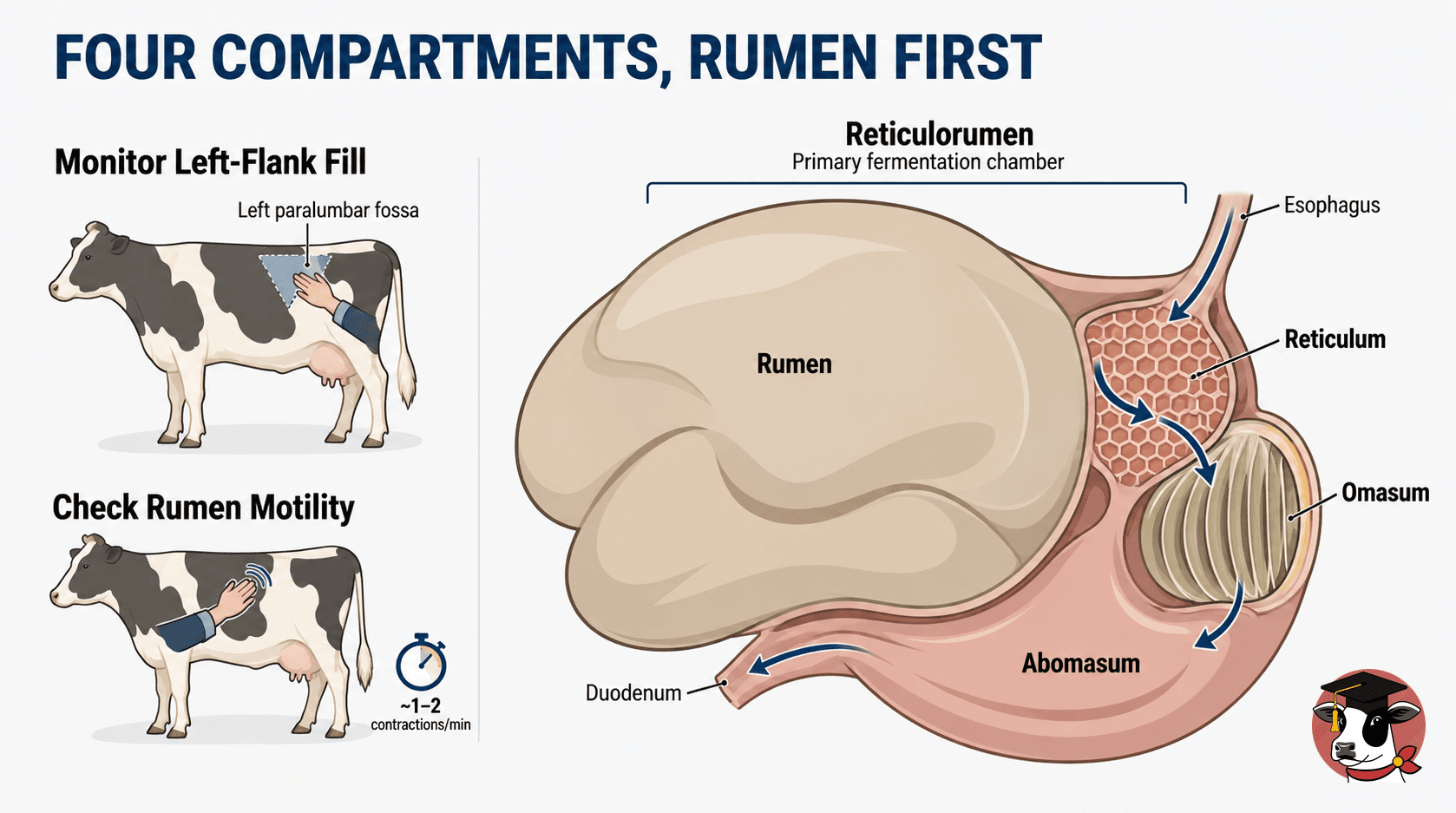 Knowledge level in this topic: Basic. First-pass in this topic — useful even if you already know another area well.Rumen · Inside the rumenThe Four CompartmentsRuminants run specialized pre-gastric fermentation: four compartments, but field management lives or dies on rumen health (fiber → usable energy).
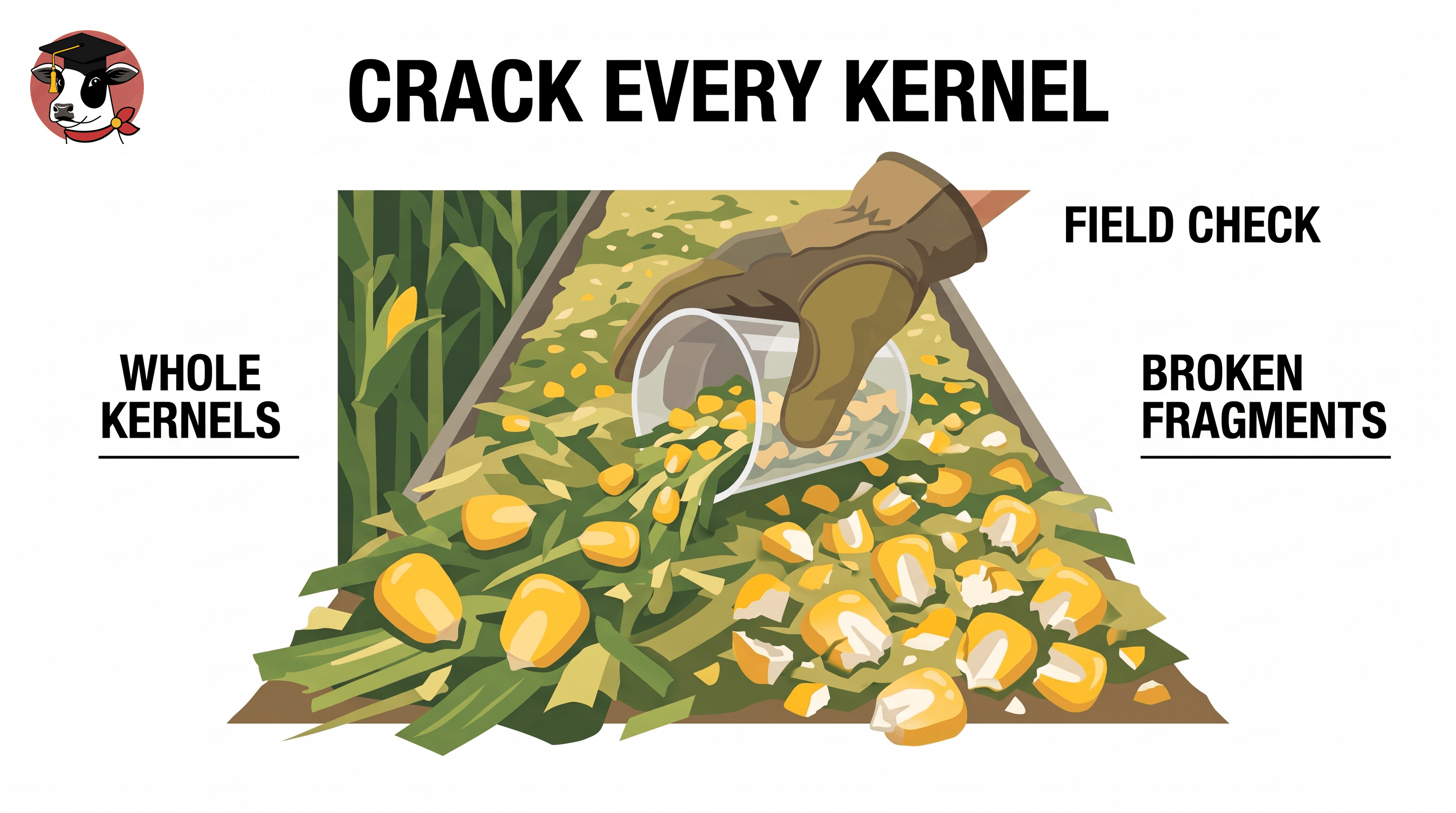 Knowledge level in this topic: Intermediate. Barn-side working knowledge in this topic: checks, pairing, and what to do next.Rumen · Starch load & SARAKernel Processing Unlocks the StarchCorn silage starch is only worth what the rumen can reach. A whole or merely cracked kernel keeps it locked away, and harvest is the only time the processor can still fix that.
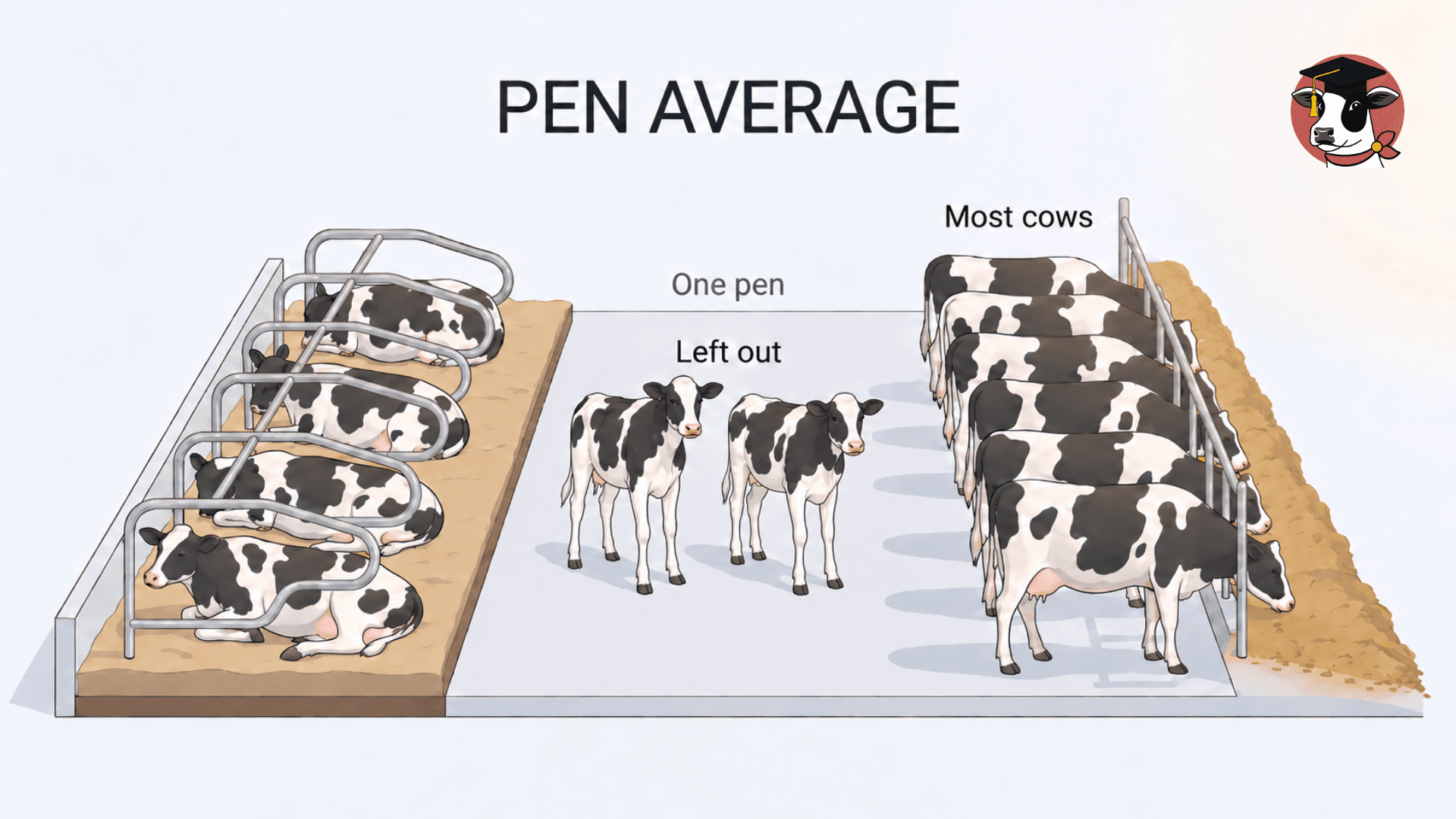 Knowledge level in this topic: Intermediate. Barn-side working knowledge in this topic: checks, pairing, and what to do next.Barn · Stocking & cow flowThe Pen Average Hides the Cows That LoseA pen average weights every cow equally, so a small group that is doing badly can disappear inside a number that looks acceptable.
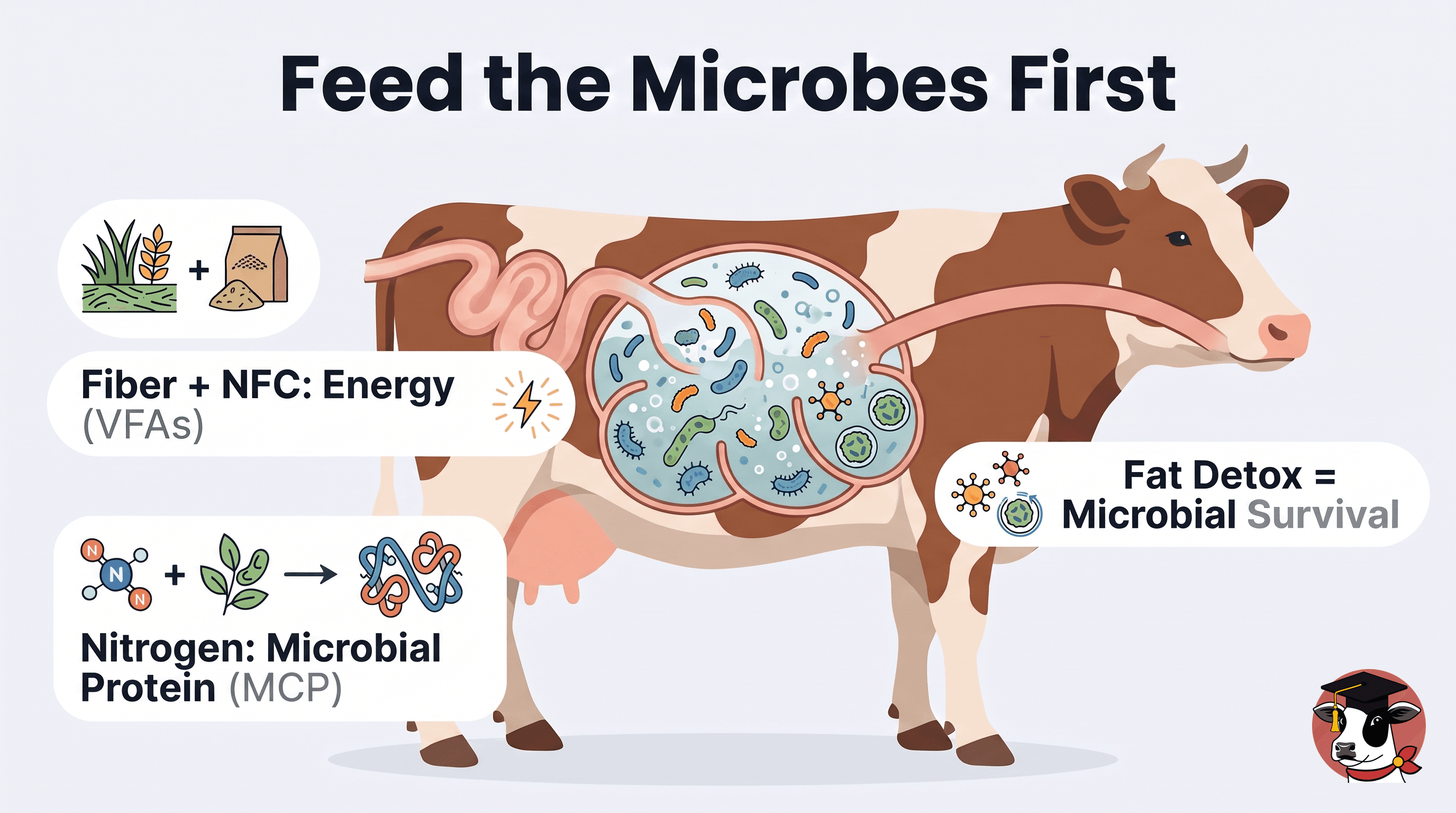 Knowledge level in this topic: Intermediate. Barn-side working knowledge in this topic: checks, pairing, and what to do next.Rumen · Inside the rumenMicrobes and FermentationFeed the microbes first: fiber + NFC → VFAs for energy; dietary N upgrades to microbial crude protein; biohydrogenation of PUFA is microbial survival, not an MFD deep dive.
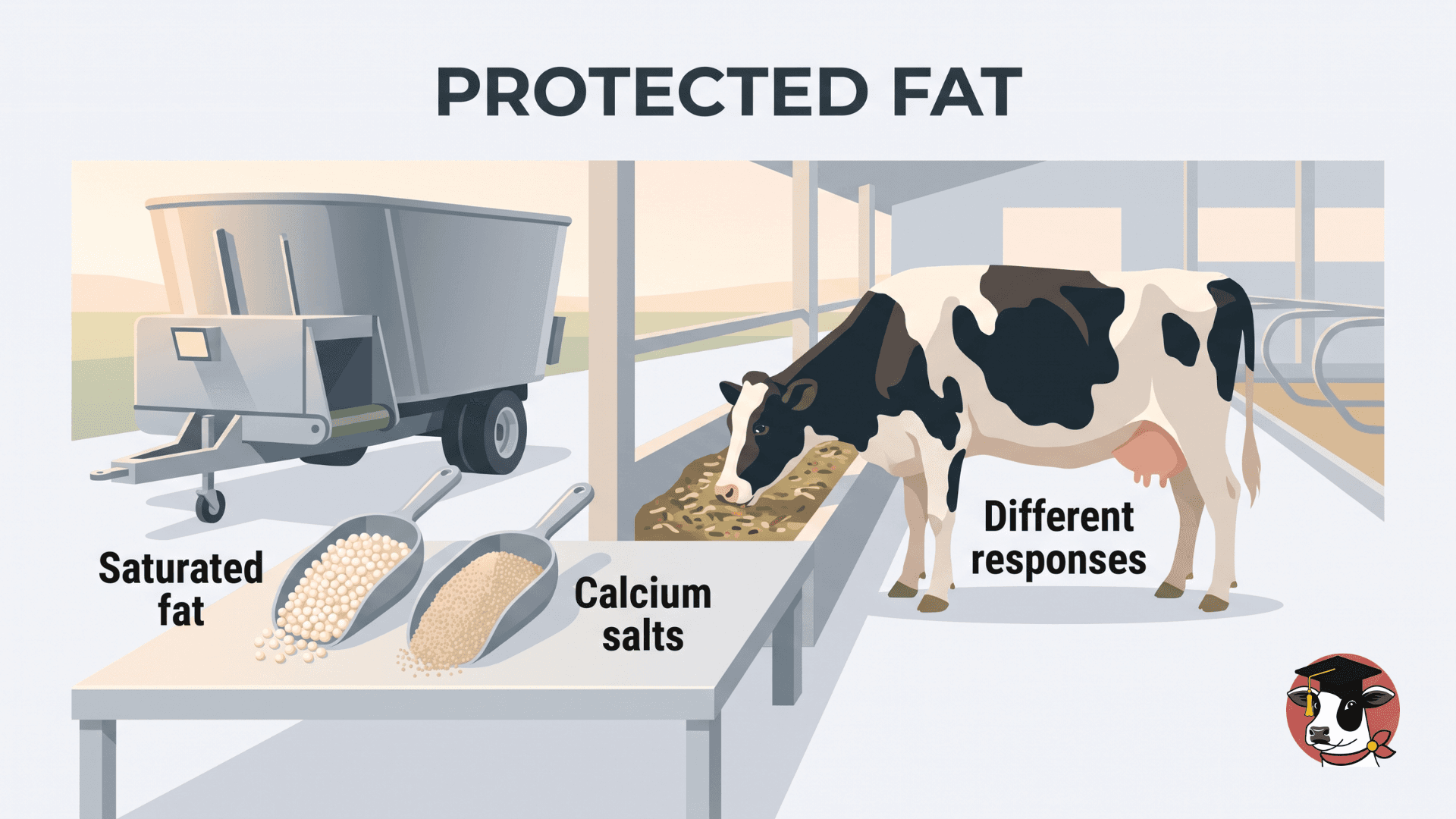 Knowledge level in this topic: Advanced. Mechanism and stacked risk in this topic — assumes the first-pass frame.Rumen · Starch load & SARARumen-Inert Fat Is Energy with a CatchRumen-inert fat can increase dietary energy density, but its value depends on the fatty acids supplied, their digestibility, and how the cow responds.
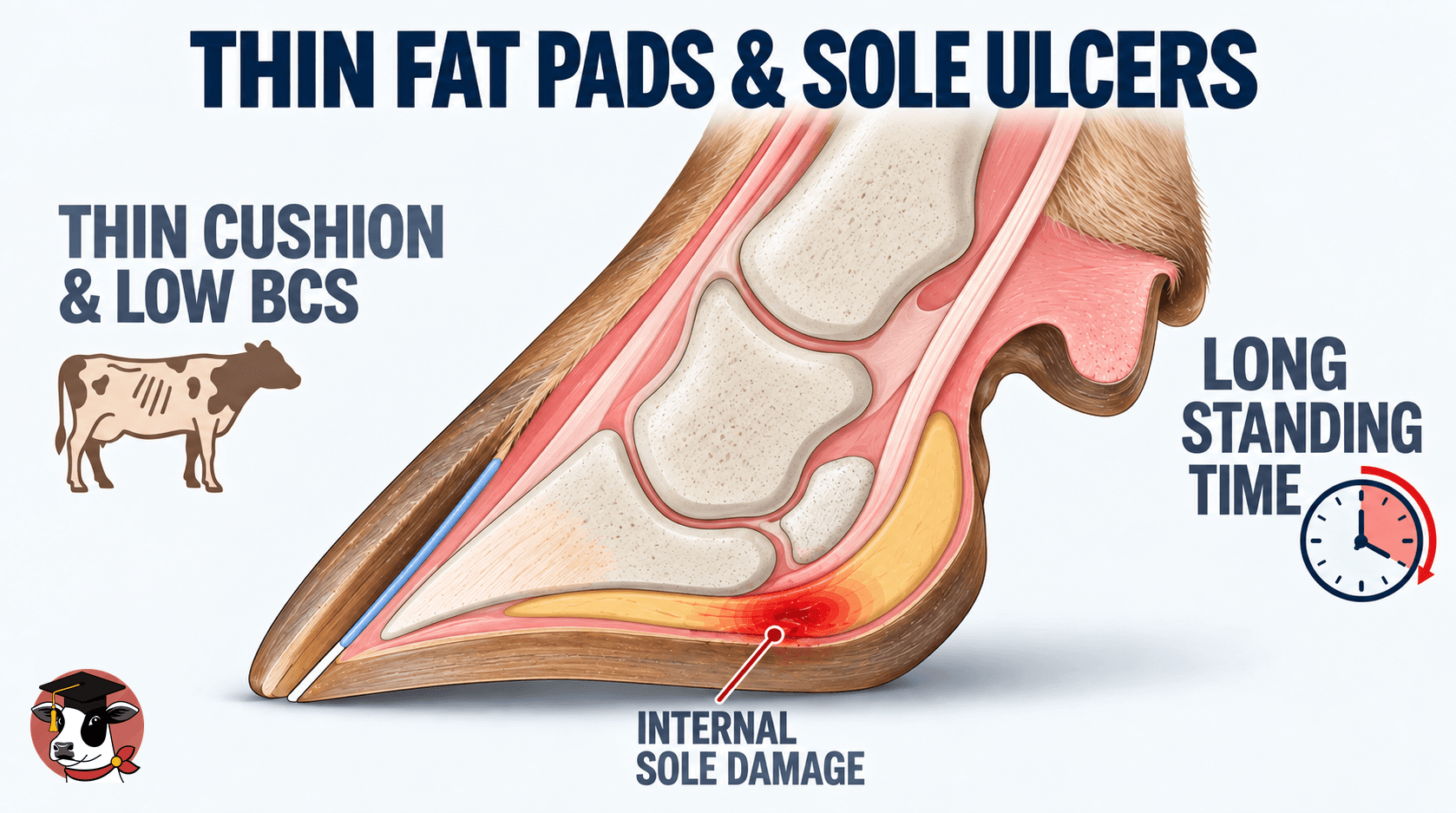 Knowledge level in this topic: Advanced. Mechanism and stacked risk in this topic — assumes the first-pass frame.Hoof · Why hoof lesions developDigital Cushion Thickness, Transition, and Sole-Ulcer RiskThe digital cushion helps dissipate load beneath the pedal bone. Thin sole soft tissues have been associated with later claw-horn lesions, but cushion thickness is not simply a reflection of body condition. Stage of lactation, parity, farm conditions, previous lesions, and tissue structure all appear to matter.
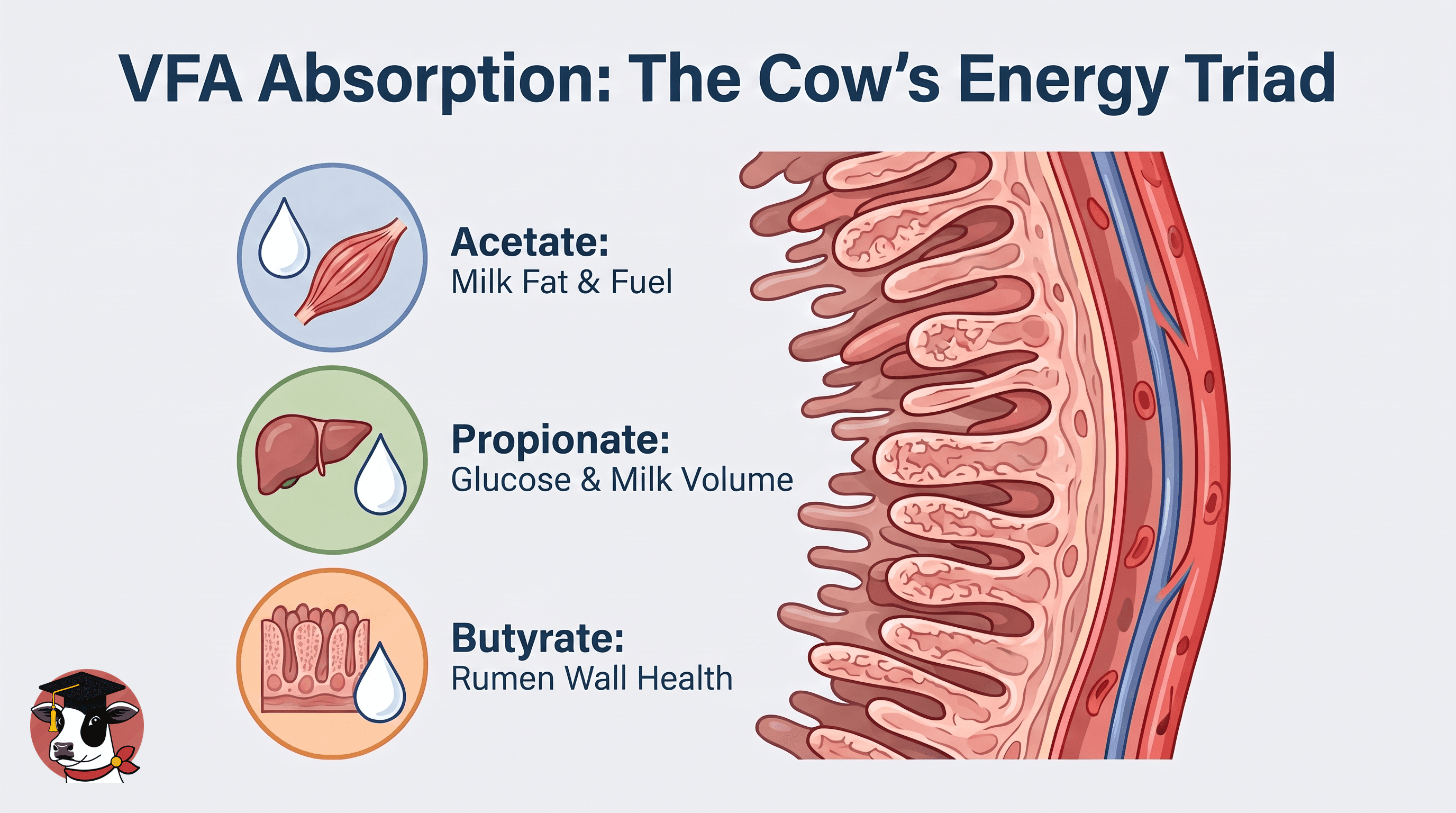 Knowledge level in this topic: Intermediate. Barn-side working knowledge in this topic: checks, pairing, and what to do next.Rumen · Inside the rumenVFAs and AbsorptionVFAs absorbed across the rumen wall supply most of the cow's metabolizable energy: acetate for milk fat and maintenance, propionate for glucose and lactose, butyrate for the wall itself.
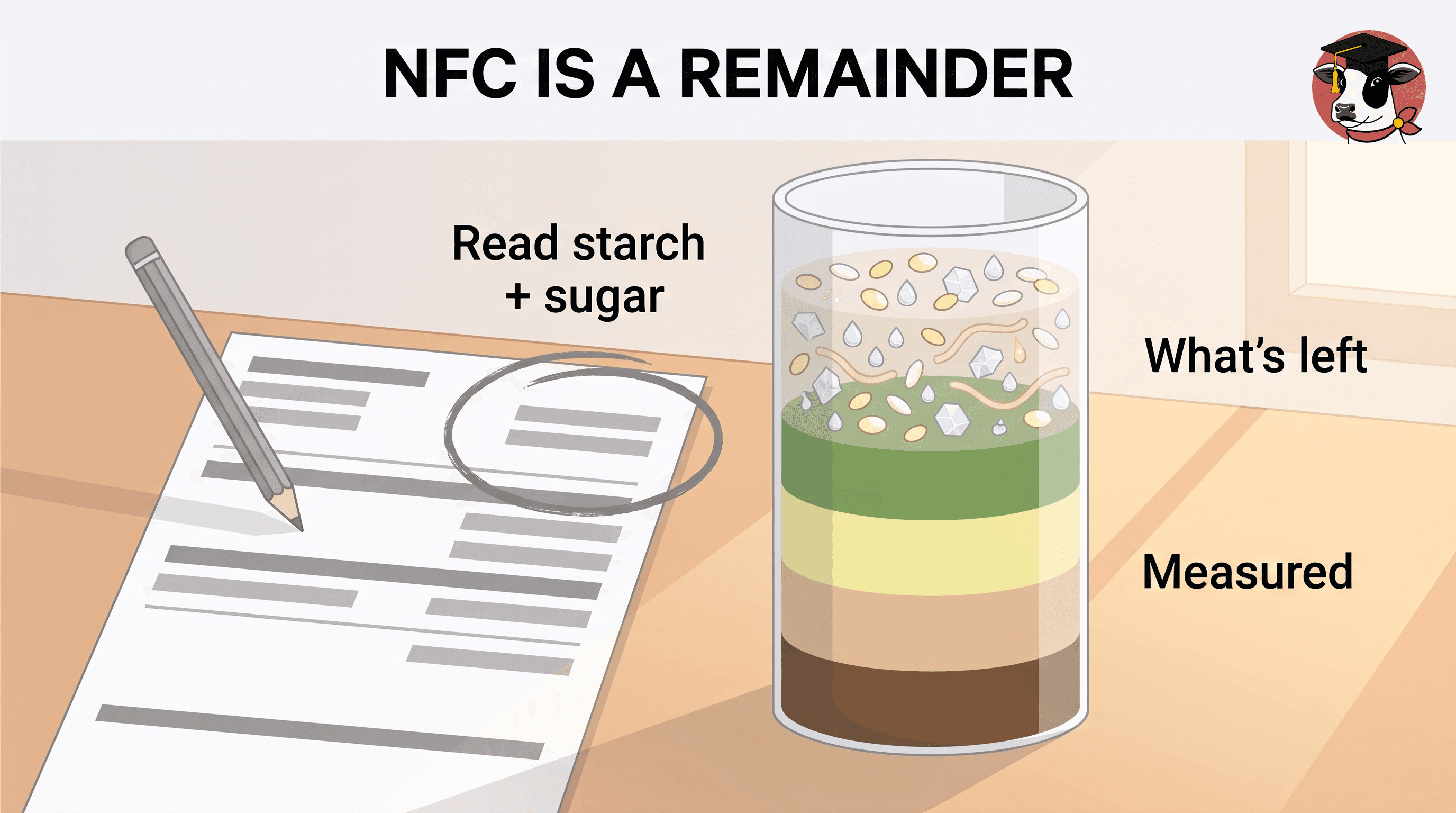 Knowledge level in this topic: Intermediate. Barn-side working knowledge in this topic: checks, pairing, and what to do next.Rumen · Physically effective fiberNFC Is a RemainderMost carbohydrate lines on a feed report come from a lab assay. NFC does not. It is what is left after NDF, protein, fat and ash are subtracted from 100, so it carries their errors, and it holds a lot more than starch.
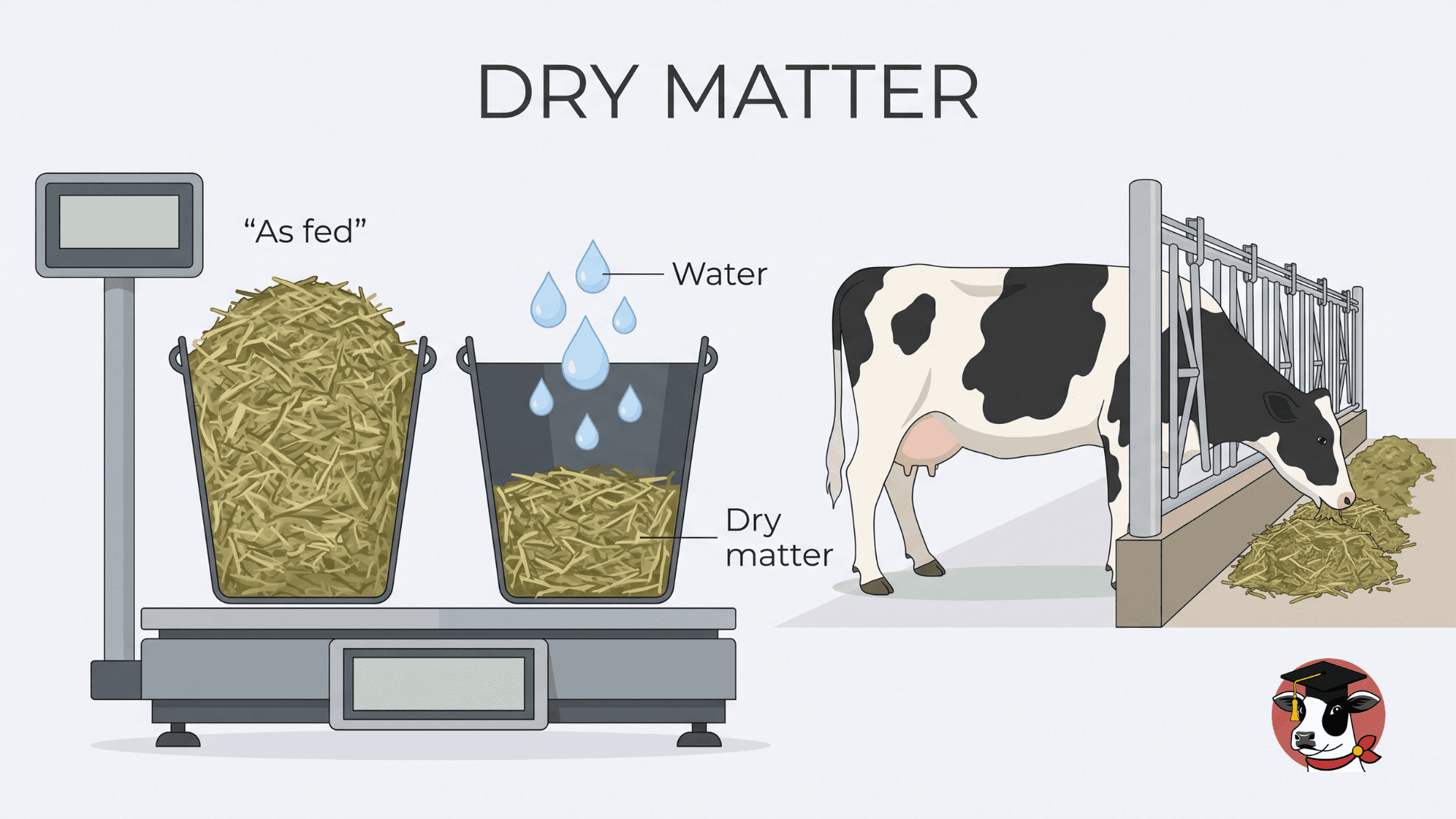 Knowledge level in this topic: Basic. First-pass in this topic — useful even if you already know another area well.Rumen · Physically effective fiberDry Matter and As Fed Are Different JobsScales weigh feed with its water, rations are balanced on dry matter, and a wetter or drier silage means the same scale weight no longer delivers the same dry matter.
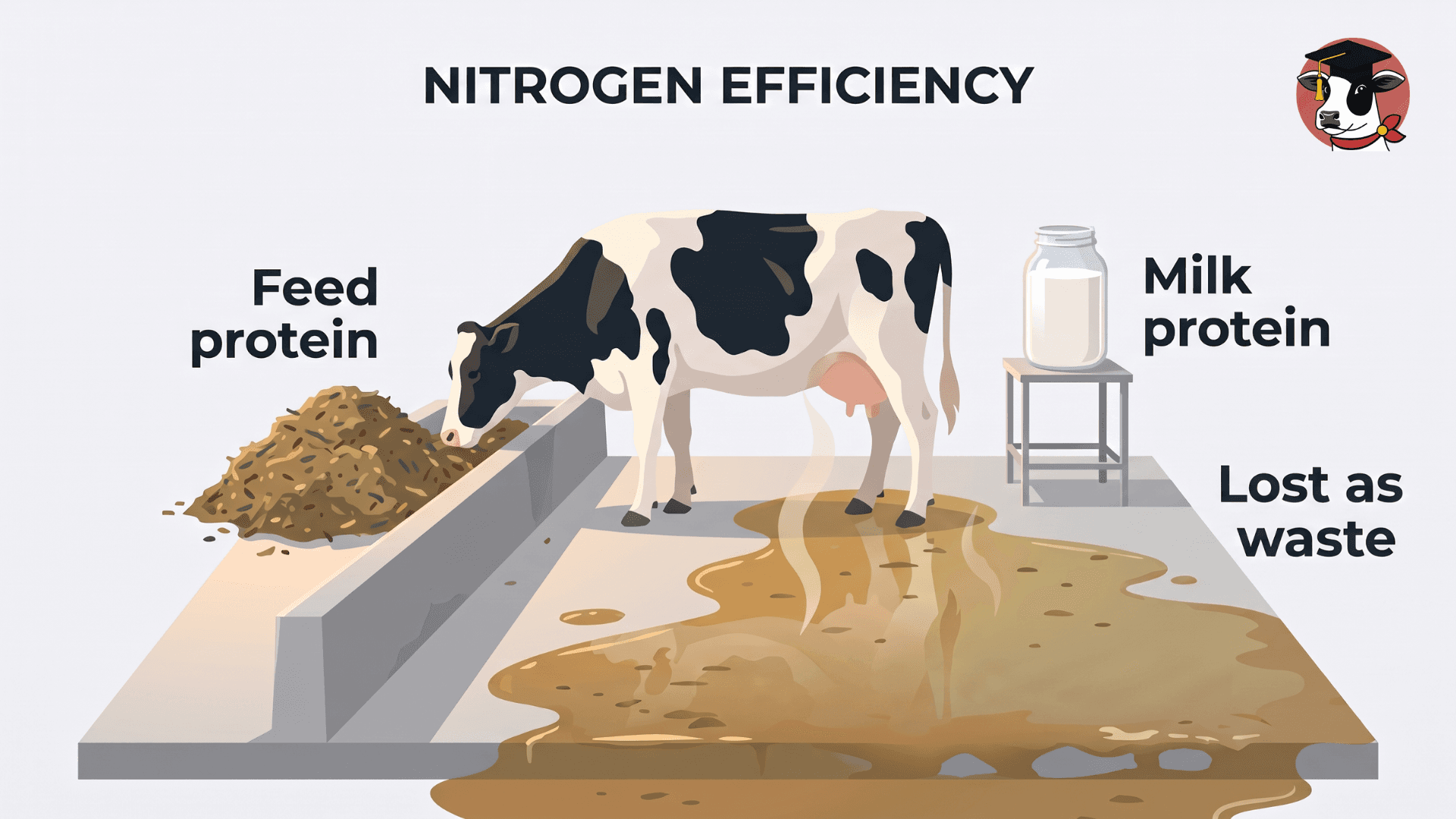 Knowledge level in this topic: Advanced. Mechanism and stacked risk in this topic — assumes the first-pass frame.Rumen · Inside the rumenNitrogen Efficiency Is Milk N Over Feed NOnly about a quarter to a third of the nitrogen a lactating cow eats leaves in milk. The rest goes out in urine and manure. Protein fed beyond what the cow can use mostly adds urinary nitrogen, which costs money and adds to ammonia loss.
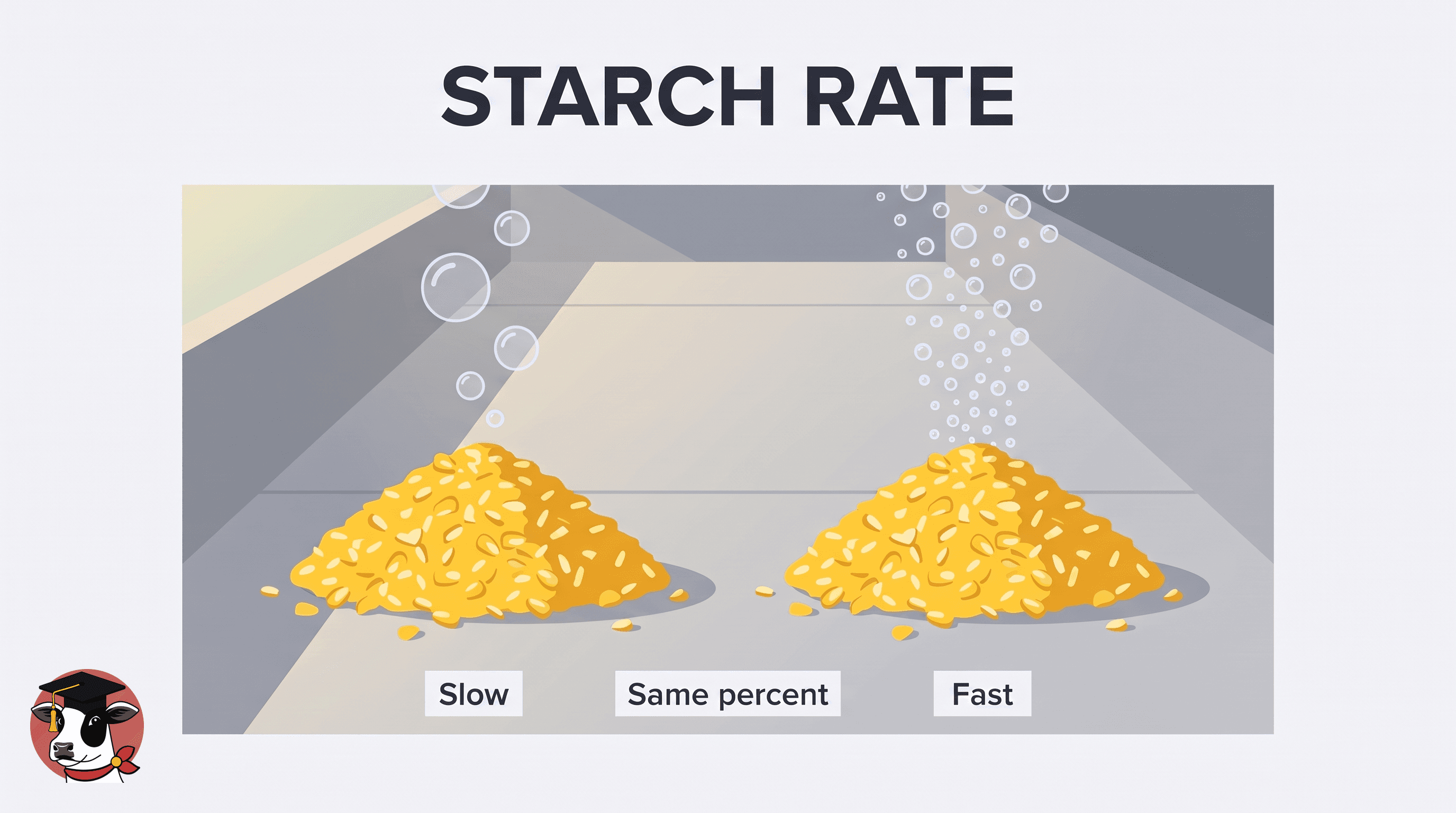 Knowledge level in this topic: Intermediate. Barn-side working knowledge in this topic: checks, pairing, and what to do next.Rumen · Starch load & SARAStarch Rate, Not Starch PercentTwo rations can print the same starch percentage and still ferment at very different speeds. Grain type, processing and time in the silo set that speed, and the fall switch to new-crop corn silage changes it twice: once at the switch and again over the winter.
1 of 20
13 sheets
Pick an area. Open a sheet.
On this sheet · 14
View all →- Knowledge level in this topic: Advanced. Mechanism and stacked risk in this topic — assumes the first-pass frame.Nitrogen Efficiency Is Milk N Over Feed N
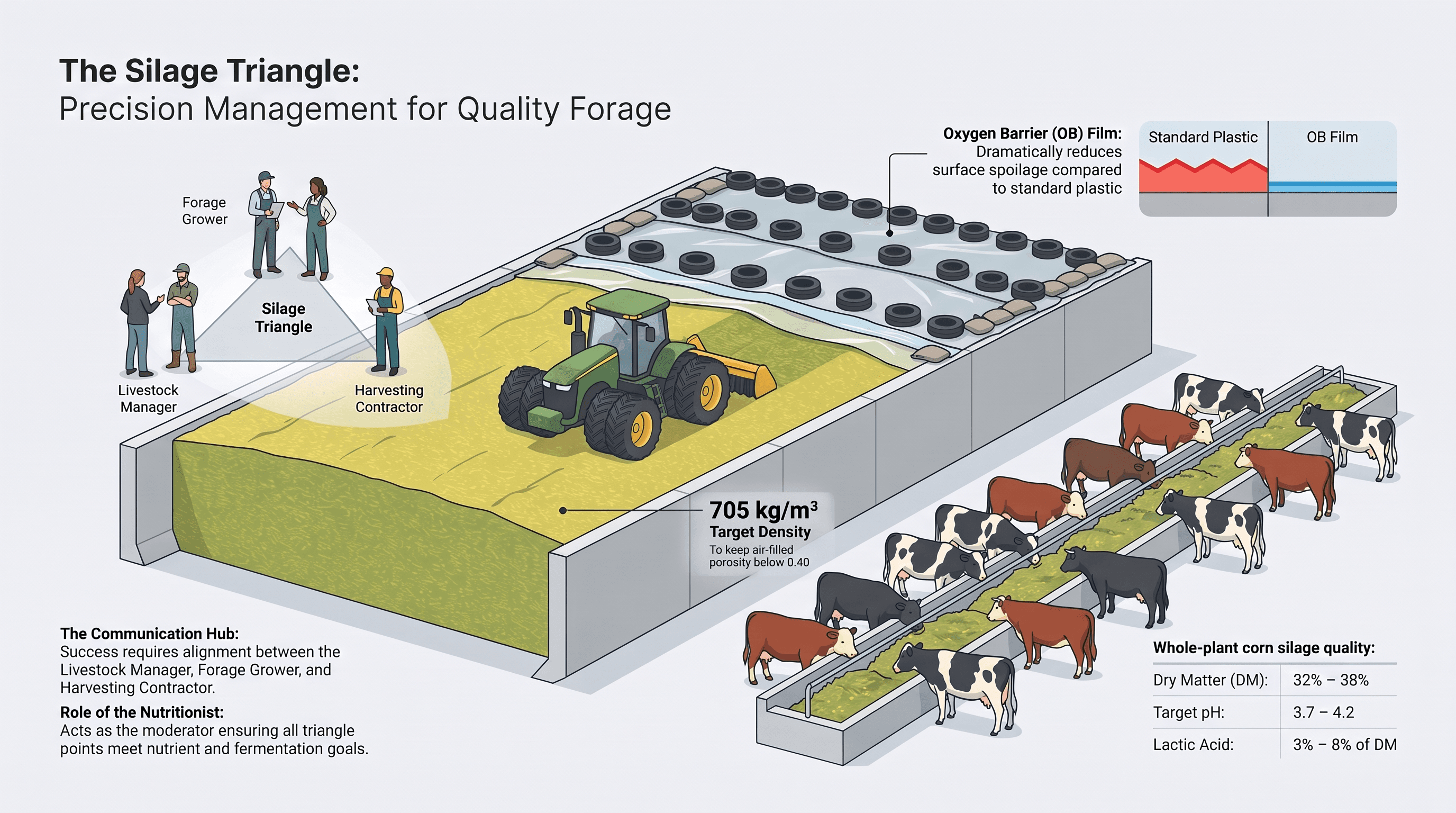 Knowledge level in this topic: Intermediate. Barn-side working knowledge in this topic: checks, pairing, and what to do next.Air at the face spoils the pack
- Knowledge level in this topic: Intermediate. Barn-side working knowledge in this topic: checks, pairing, and what to do next.Microbes and Fermentation
- Knowledge level in this topic: Intermediate. Barn-side working knowledge in this topic: checks, pairing, and what to do next.VFAs and Absorption
On this sheet · 14
View all →- Knowledge level in this topic: Advanced. Mechanism and stacked risk in this topic — assumes the first-pass frame.Nitrogen Efficiency Is Milk N Over Feed N
- Knowledge level in this topic: Intermediate. Barn-side working knowledge in this topic: checks, pairing, and what to do next.Air at the face spoils the pack
- Knowledge level in this topic: Intermediate. Barn-side working knowledge in this topic: checks, pairing, and what to do next.Microbes and Fermentation
- Knowledge level in this topic: Intermediate. Barn-side working knowledge in this topic: checks, pairing, and what to do next.VFAs and Absorption
Also from Cowdemy
Sibling schools next door. Same family, different job — operations on the hoof, nutrition in the bunk.
 Operations for trim teamsPractical hoof-health, trimming workflow, lesion tracking, and dairy hoof-care knowledge for trim teams and herd health staff.Open Hoof Cowdemy
 Feed and nutrition schoolPractical feed, dairy nutrition, and livestock performance knowledge for teams who manage rations, feeding programs, and herd performance.Open Feed Cowdemy