
Milk fat depression starts in the rumen
High starch and unsaturated fat with weak effective fiber can shift biohydrogenation toward trans-10 intermediates that suppress mammary fat synthesis.
3 min read · 2026-09-09
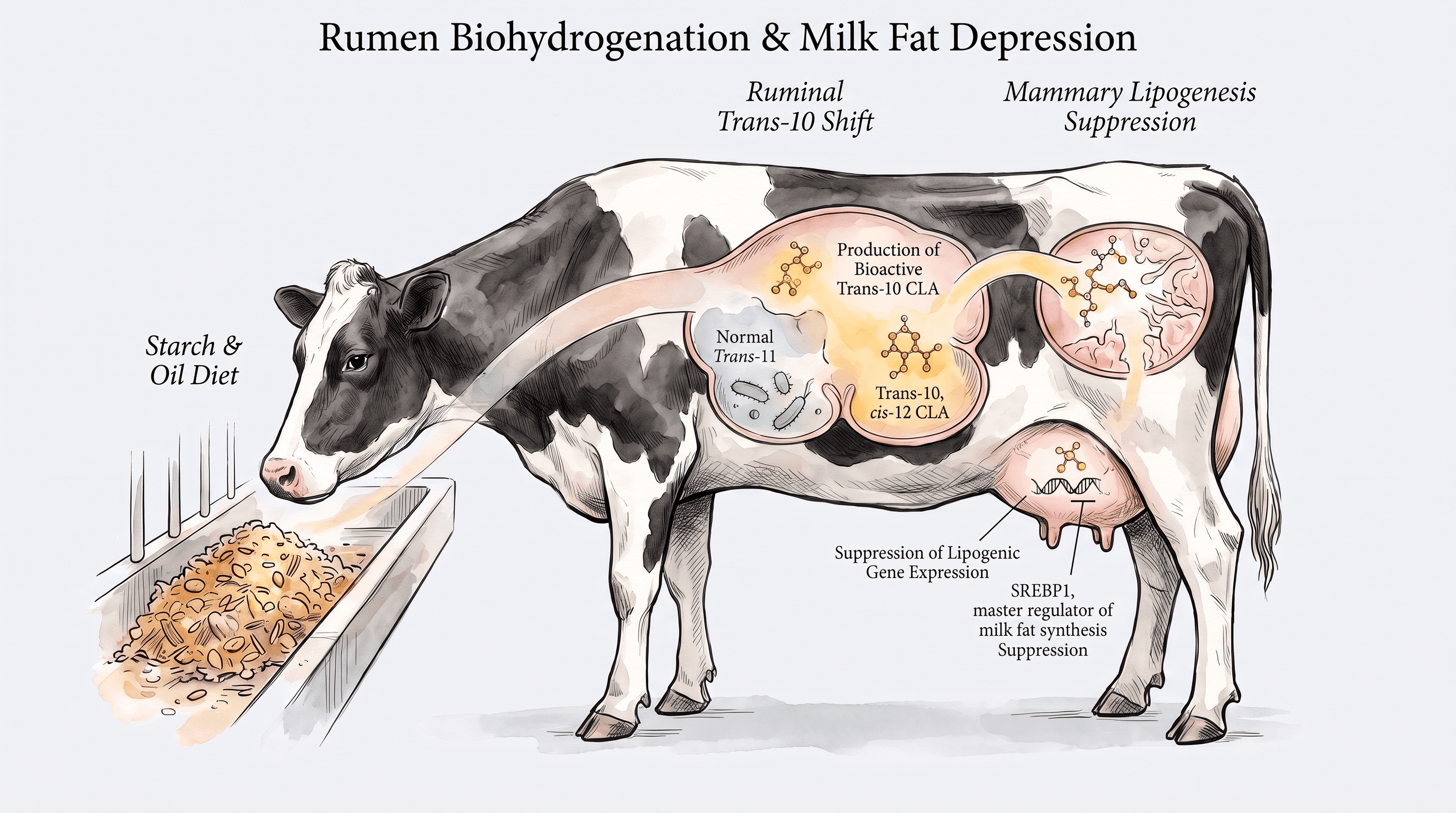
The tank fat test slips a few tenths. The ration looks “hot.” The first instinct is to blame genetics or the parlor. For classic diet-induced milk fat depression, the story usually starts earlier — in the rumen’s fatty-acid traffic.
Dietary unsaturated fats are normally hydrogenated toward pathways that produce trans-11 intermediates. Under high starch load, low effective fiber, and/or high unsaturated oil pressure, the microbial community can shift. Biohydrogenation then favors trans-10 intermediates, including bioactive CLA isomers such as trans-10,cis-12 CLA.
Those molecules leave the rumen, reach the mammary gland, and help suppress lipogenic gene programs that build milk fat. The cow still milks. She just puts less fat in the milk.
This is not a call for a boutique fatty-acid assay on every herd. It is a systems check: Is physically effective fiber still building a mat and driving cud? Is starch arriving faster than the rumen can buffer? Are free oils or high-PUFA byproducts stacking on top of that starch load?
When peNDF fails and starch/oil rises together, milk fat is often the early dashboard light — related to the same instability that SARA describes from the pH side.
Sources
- Invited review: Role of rumen biohydrogenation intermediates and rumen microbes in diet-induced milk fat depression: An update — Dewanckele et al. 2020, Journal of Dairy Science
- Nutritional regulation of milk fat synthesis — Bauman & Griinari 2003, Annual Review of Nutrition
- From Feed to Milk: Understanding Rumen Function — Penn State Extension