
CowdemyHoofFIG. 09Foundation11 min
From lameness to lesion
Most dairy lameness is a foot. Score the walk, localize the limb, look at the foot, name the lesion, record it — and know when it is not the hoof.
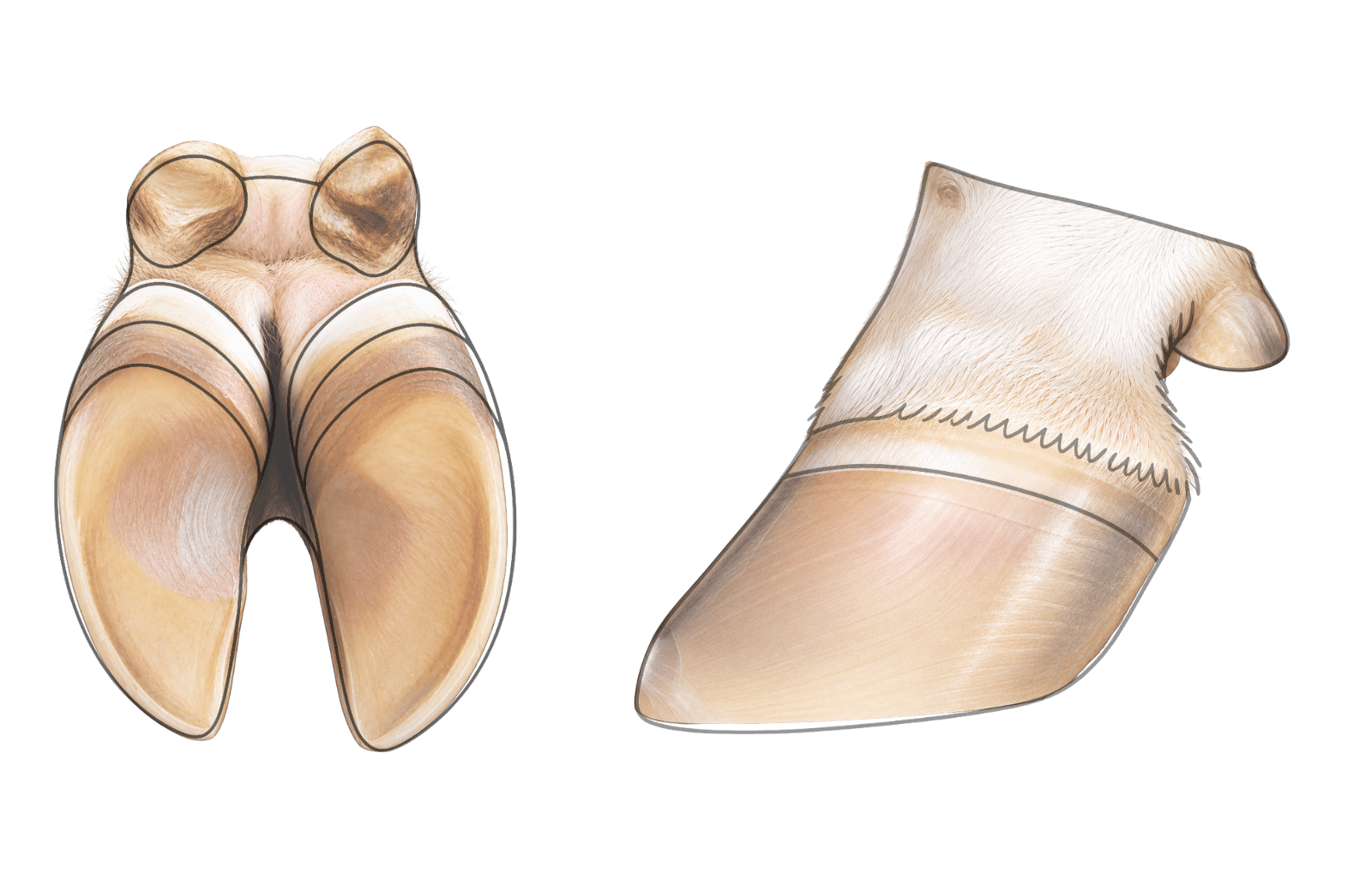
Numbers
Where lameness lives
The foot
Most cattle lameness, especially in dairy herds, originates in the foot: claw or interdigital skin.
Merck Veterinary Manual
Spot it
MeaningShe drops the head when the sore foot lands. That is a foot-load story until proven otherwise.
Next checkWatch from the side in the alley. Get a lesion name on the chute — do not stop at “lame.”
Field notes on this focus
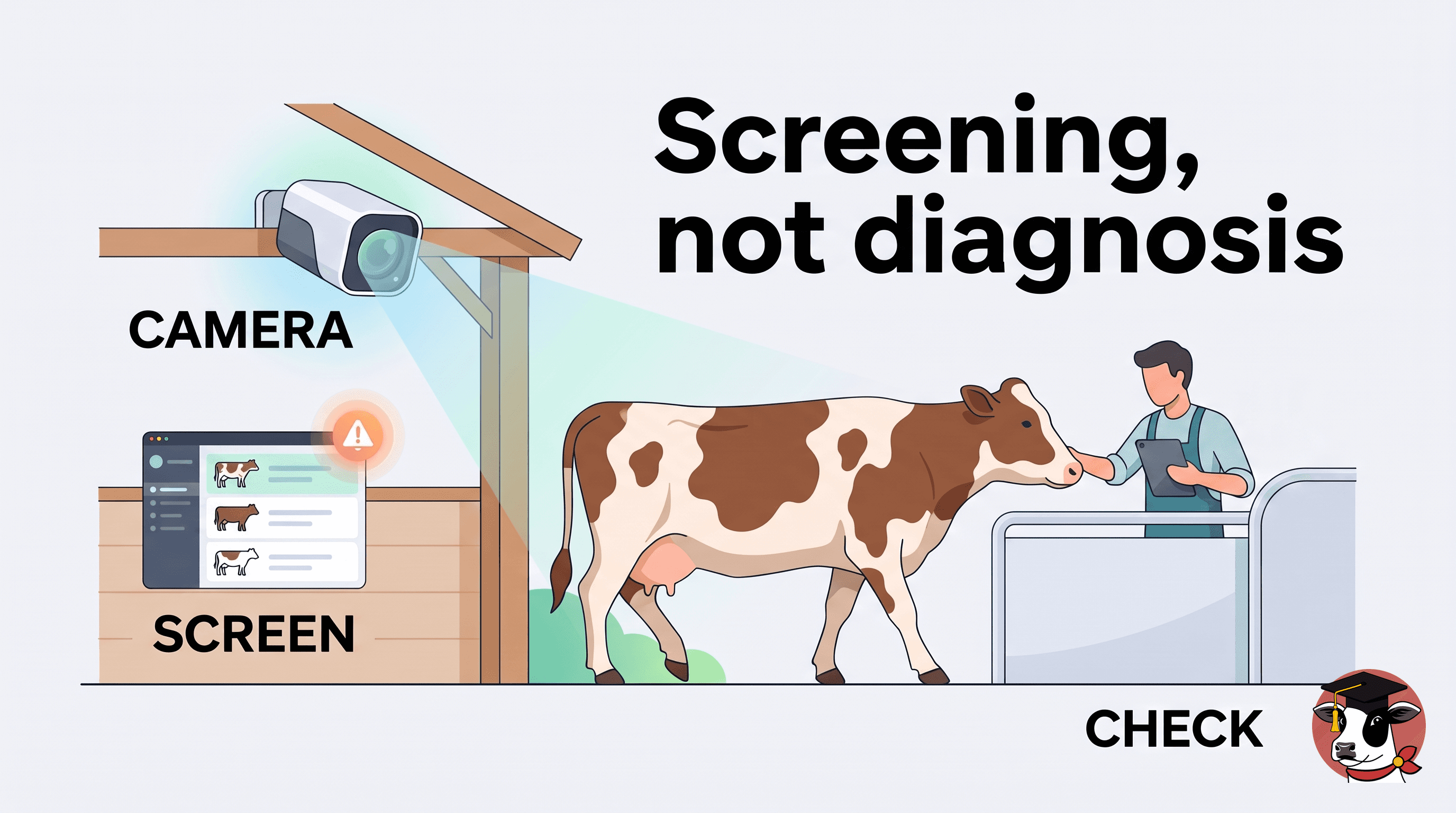
- Note 01Camera scores are screening — not diagnosesComputer-vision gait scores can prioritize cows and track herd trends — useful screening when camera setup is honest, never a veterinary diagnosis on their own.Knowledge level in this topic: Intermediate. Barn-side working knowledge in this topic: checks, pairing, and what to do next.3 min · 2026-09-10
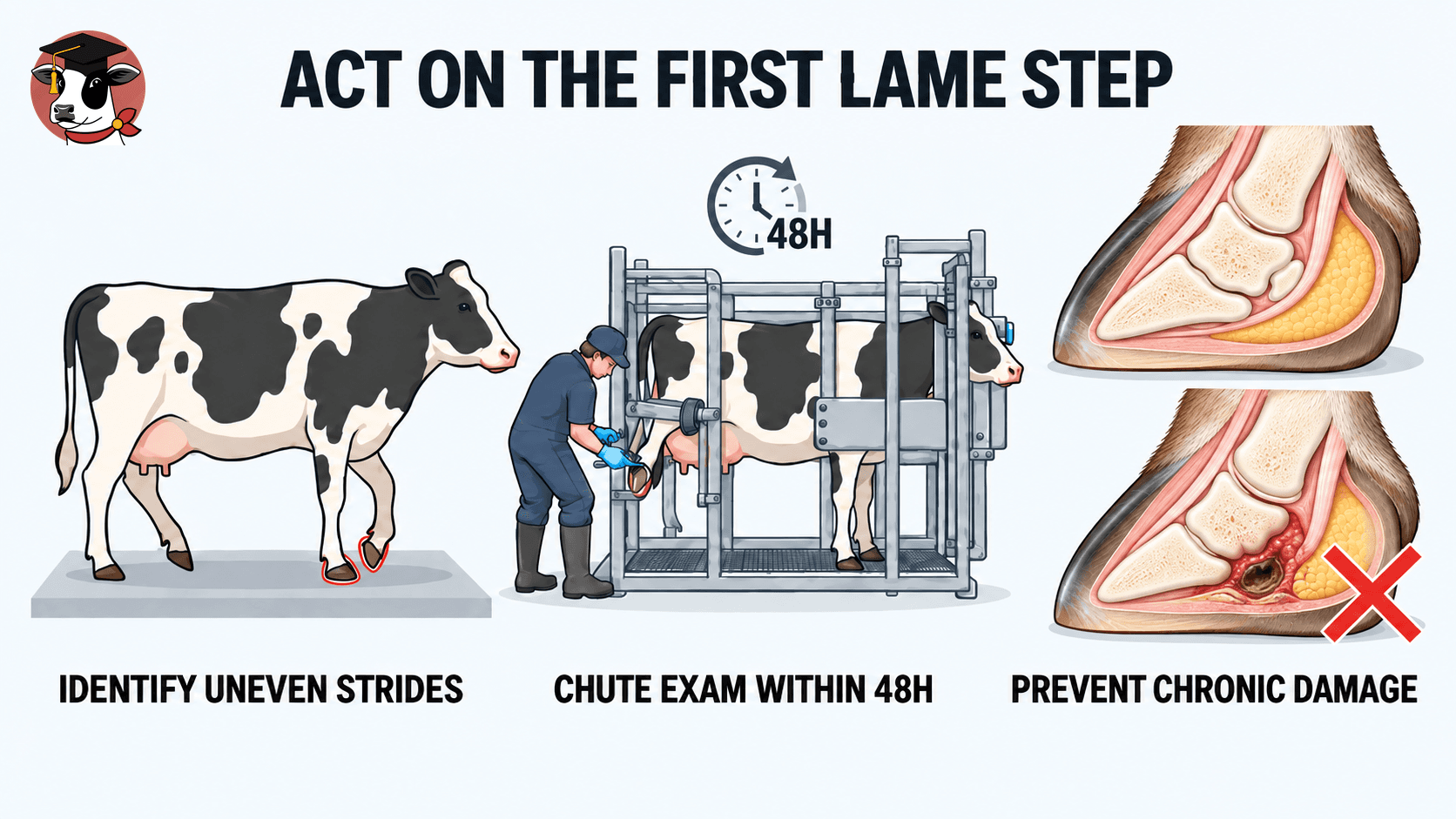
- Note 02Early Lameness Detection: Why Treating the First Lame Step MattersCatching the first mild limp beats waiting for an obvious non-weight-bearing cow. Early follow-up shortens lesion progression and protects lying time and milk.Knowledge level in this topic: Intermediate. Barn-side working knowledge in this topic: checks, pairing, and what to do next.3 min · 2026-09-14
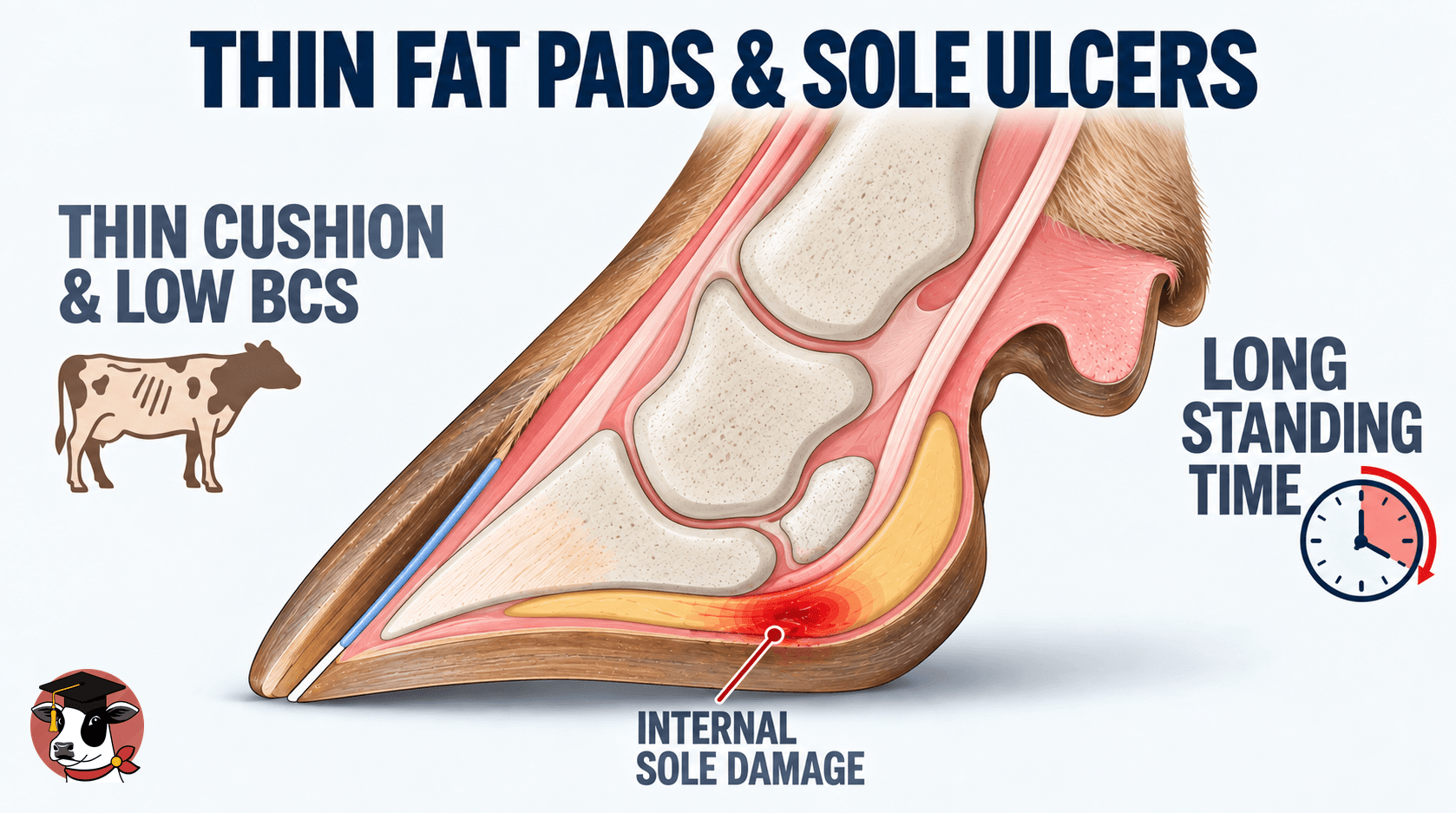
- Note 03Digital Cushion Thickness, Transition, and Sole-Ulcer RiskThe digital cushion helps dissipate load beneath the pedal bone. Thin sole soft tissues have been associated with later claw-horn lesions, but cushion thickness is not simply a reflection of body condition. Stage of lactation, parity, farm conditions, previous lesions, and tissue structure all appear to matter.Knowledge level in this topic: Advanced. Mechanism and stacked risk in this topic — assumes the first-pass frame.4 min · 2026-09-17
Also touches this focus
- Note 01Name horn or skin before you sprayDigital dermatitis and a sole ulcer fail entirely different tissues. One protocol cannot fix both.Knowledge level in this topic: Basic. First-pass in this topic — useful even if you already know another area well.3 min · 2026-09-07
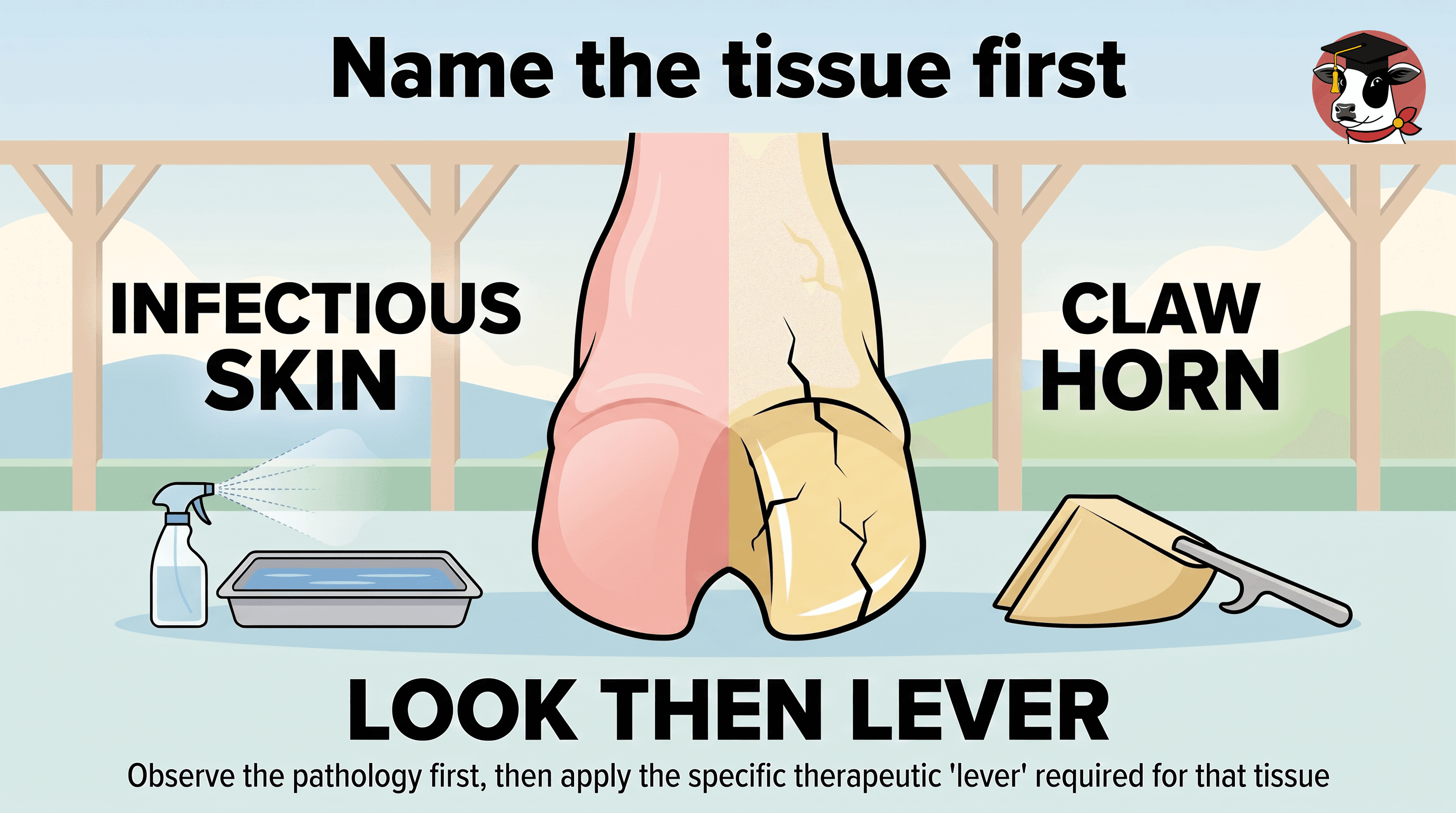
- Note 02Hoof records are herd trends — not diagnosesStandardized digital trim records and lesion codes can show infectious vs claw-horn patterns over time — useful herd trends when read with BCS, energy balance, and standing time, not a cow-side diagnosis.Knowledge level in this topic: Intermediate. Barn-side working knowledge in this topic: checks, pairing, and what to do next.3 min · 2026-09-09
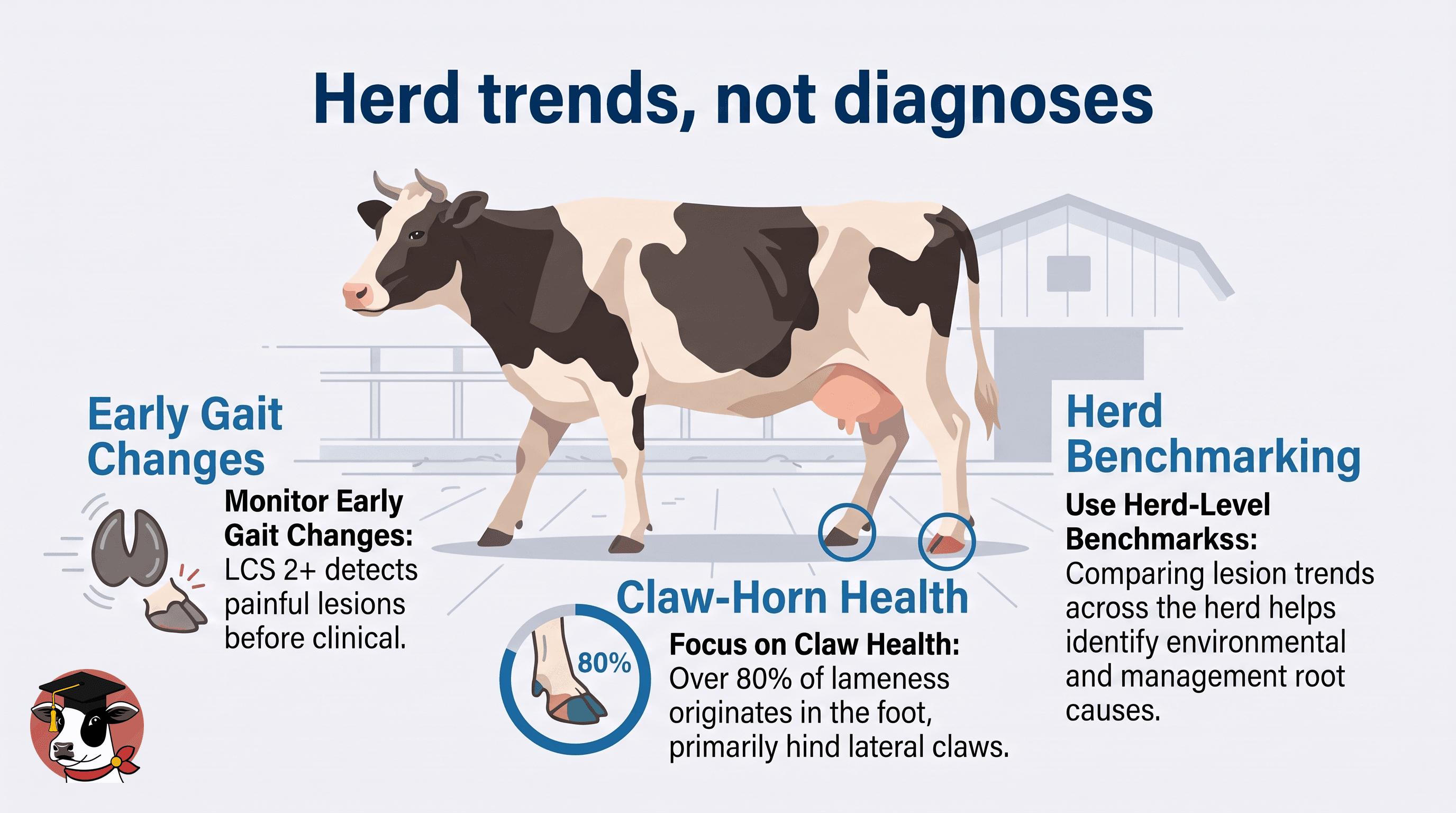
- Note 03Standing time is the doseProlonged standing load can bruise the corium and surface weeks later as a claw-horn lesion.Knowledge level in this topic: Advanced. Mechanism and stacked risk in this topic — assumes the first-pass frame.3 min · 2026-09-08
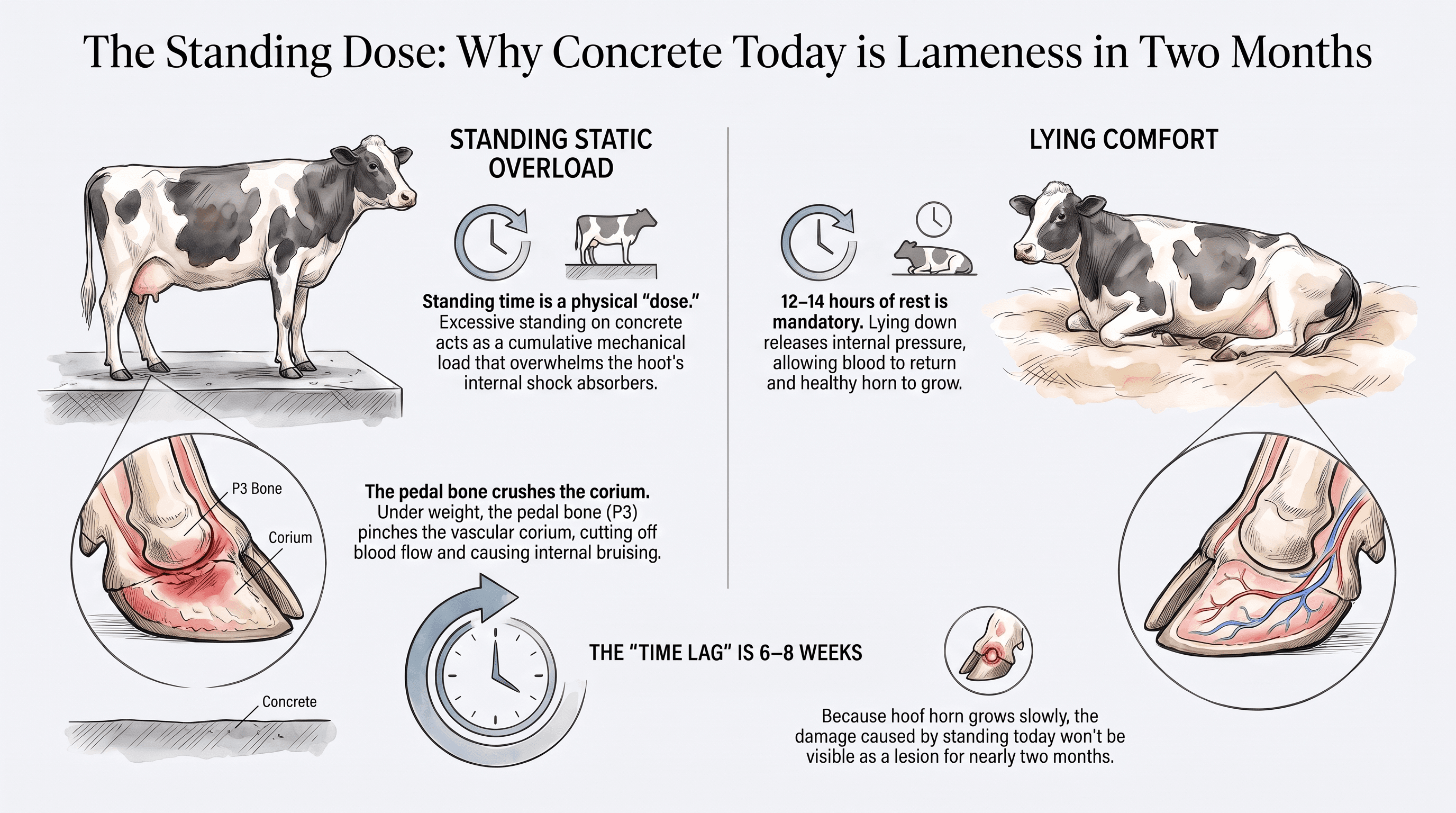
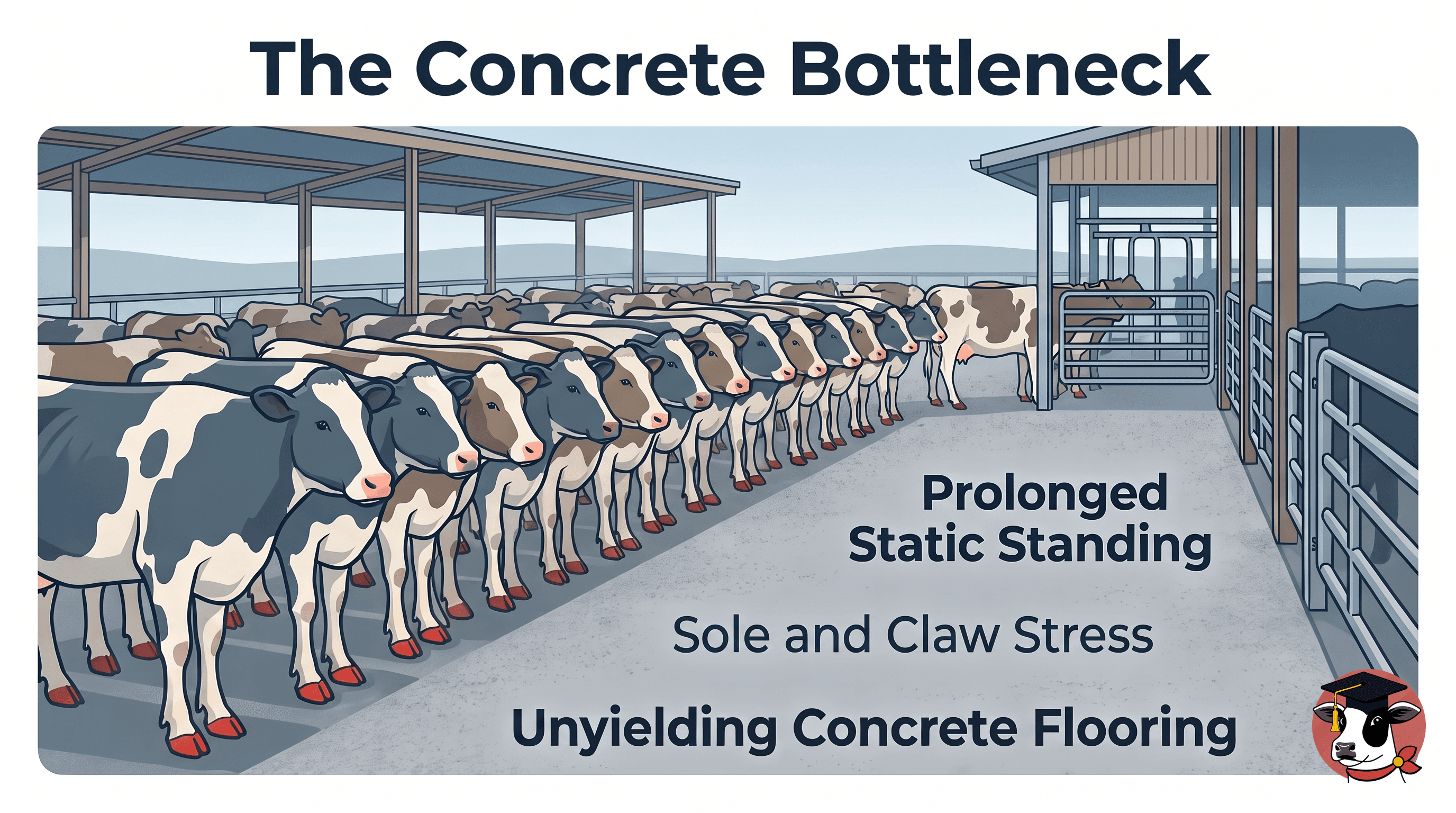
- Note 04The new parlor added two hours of standingThroughput rose. Thin soles followed the extra hold time.Knowledge level in this topic: Intermediate. Barn-side working knowledge in this topic: checks, pairing, and what to do next.4 min · 2026-09-07
Quick check
Q 01 / 01
Where does most dairy lameness start?
Sources
- Overview of Lameness in Cattle — Merck Veterinary Manual
- ICAR Claw Health Atlas — ICAR
- Mobility scoring: How to score your cows — AHDB Knowledge Library
- Hoof Cowdemy — trim-chute craft — BarnX / Hoof Cowdemy
Plate credit
System figures are educational plates drawn from public-domain veterinary teaching anatomy (udder, claw, uterus, and housing relationships). They are not scanned specimens. Educational only.
Not a veterinary diagnosis, prescription, or ration formula.