
The new parlor added two hours of standing
Throughput rose. Thin soles followed the extra hold time.
Knowledge level in this topic: Intermediate. Barn-side working knowledge in this topic: checks, pairing, and what to do next.
4 min read · 2026-09-07
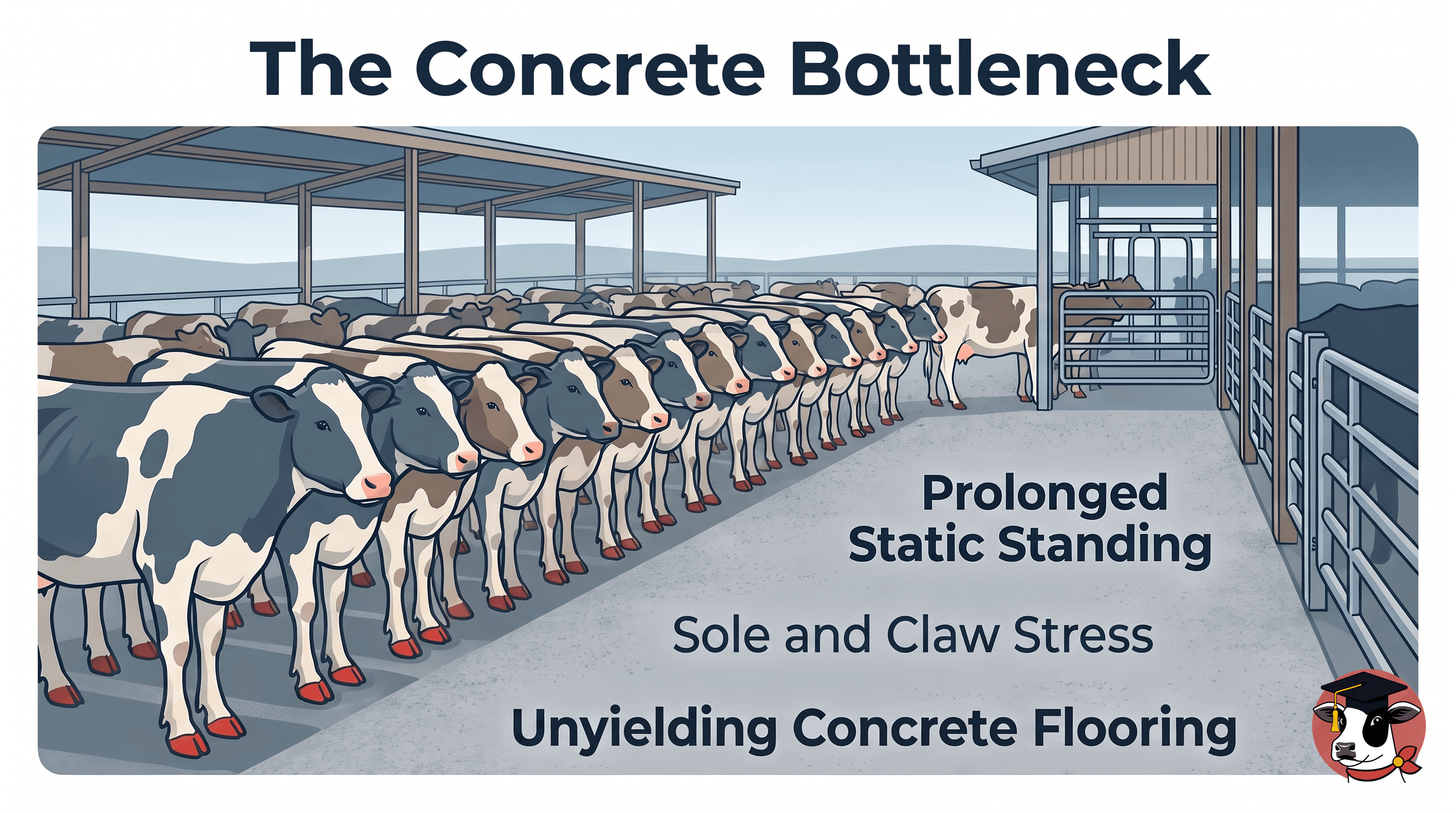
A freestall herd added parlor capacity and stacked groups in a longer hold. Milk per hour looked great. Weeks later the trim list filled with thin soles and white-line separations on the outside hind claws.
Prolonged static standing on unyielding concrete raises mechanical stress in the claw horn. Delayed lesions can include thin soles, sole ulcers, and white-line separation. These are structural/biomechanical failures — distinct from infectious skin diseases such as digital dermatitis — so the first management question is the standing clock and the surface, not only the spray bottle.
When parlor speed, group size, and holding-pen capacity are mismatched, cows accumulate concrete time before the gate. The stall beds may not have changed; the dose of standing has. Splitting groups, shortening the longest holds, improving return flow so cows do not re-queue, and giving lame cows the shortest lockup reduce new claw-horn lesions. Old lesions still need the chute — they lag the standing clock.
Time how long each group stands in the hold on a busy milking. Watch outside hind claws and thin-sole rates in the weeks after parlor or group-size changes. If milk/hour rose and sole lesions followed, fix hold logistics before rewriting the ration alone.
Parlor speed that buys standing time on concrete writes the next trim list. Match hold logistics to throughput. Sister notes on this universe cover standing time as the dose, naming horn or skin before you spray, hoof records as herd trends, and camera scores as screening. Educational only — not a diagnosis, prescription, or treatment protocol.
Keep reading
View the networkNext
Standing time is the dose
Prolonged standing load can bruise the corium and surface weeks later as a claw-horn lesion.
Knowledge level in this topic: Advanced. Mechanism and stacked risk in this topic — assumes the first-pass frame.Sister note · 3 min
Home plate: Hoof · Why hoof lesions develop · Standing time
- Standing timeThe dosePlaced here
- Flooring, Traction, Wear, and Their Effect on Claw HealthFlooring is a daily mechanical dose: traction and abrasive wear shape claw horn faster than most herds measure, and the wrong surface quietly builds the next ulcer cohort.Sister note
- Sole Ulcers, Laminitis, and Diet: Separating Evidence from AssumptionSole ulcers get blamed on “too much grain” more often than the evidence supports — separate diet risk from flooring, standing time, and claw mechanics before rewriting the ration.Sister note
Mark size is the kind. Color is the atlas area.
- Focus
- Field note
- Hoof
Sources
- Overview of Lameness in Cattle — Merck Veterinary Manual
- Non-infectious claw horn lesions in cows — AHDB Knowledge Library
- The influence of the environment on dairy cow behavior, claw health and herd lameness dynamics — Cook & Nordlund, The Veterinary Journal (2009)