
Hoof records are herd trends — not diagnoses
Standardized digital trim records and lesion codes can show infectious vs claw-horn patterns over time — useful herd trends when read with BCS, energy balance, and standing time, not a cow-side diagnosis.
3 min read · 2026-09-09
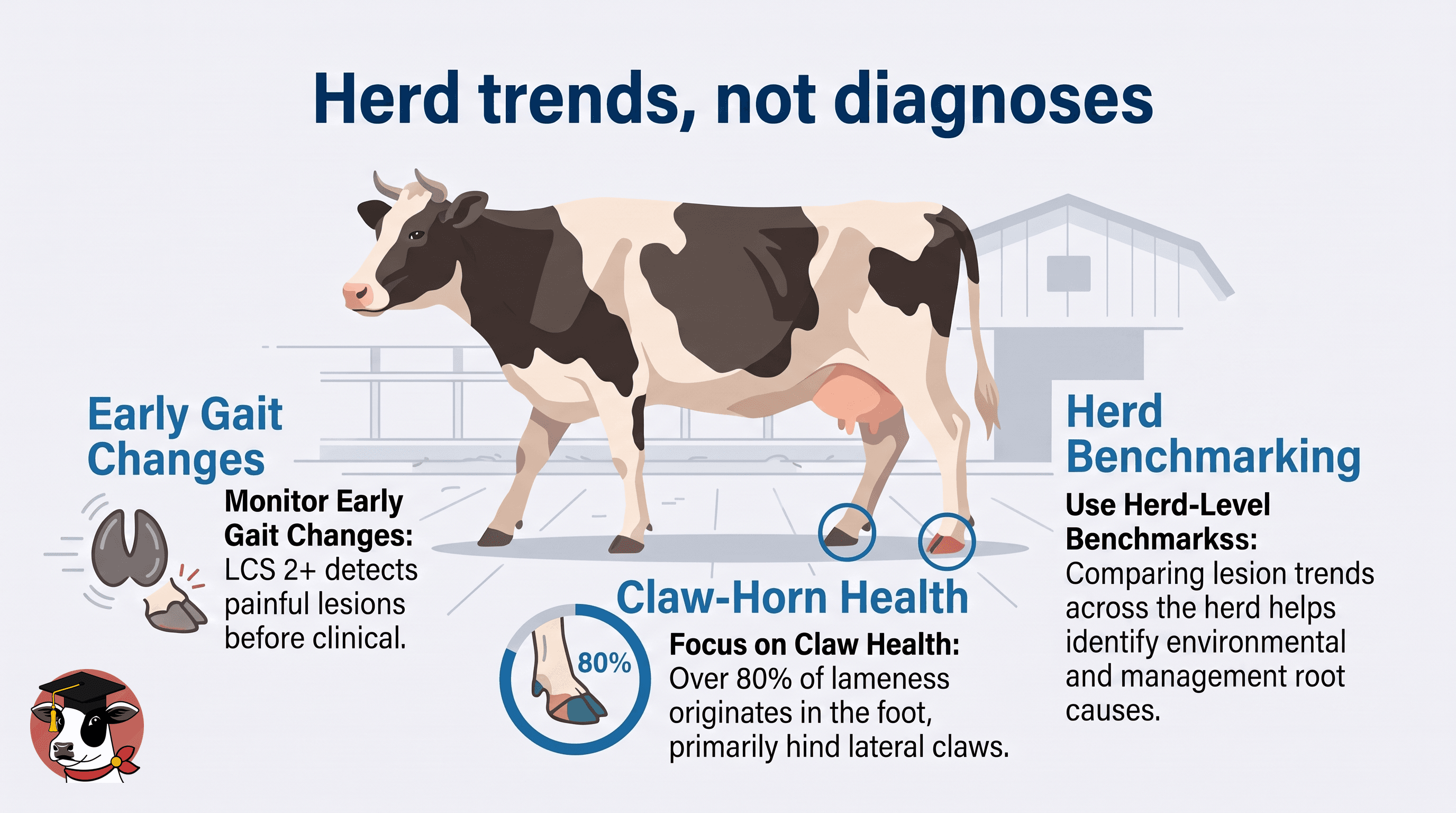
A trim chute that only saves "trimmed" wastes the visit. Digital hoof records with consistent lesion coding (ICAR-style infectious vs claw-horn categories) turn chute days into a time series the nutritionist, hoof trimmer, and herd manager can read together.
"Sore" and "bad foot" do not trend. Infectious lesions (digital dermatitis, foot rot) and claw-horn disruption (sole ulcer, white line) point at different management levers — hygiene and contact time versus standing dose, transition BCS, and flooring. Standard codes make month-to-month and pen-to-pen comparisons possible.
Claw-horn lesions often lag metabolic and biomechanical stress by weeks to months. A summer spike in sole ulcers can be a winter standing-time or early-lactation energy story still arriving. Pair lesion rates with transition BCS change, fresh-cow energy notes, and standing/lying time — the same atlas threads as standing time is the dose — before you rewrite the ration or the freestall alone.
Ask for the last six months of coded lesions by type, not just trim headcount. Which pens or parities drive infectious vs claw-horn counts? Did claw-horn rates rise after a hard transition or a long lock-up stretch? If the software cannot export codes, the first upgrade is the record — not another camera.
Sister notes on this universe cover standing time as the dose, naming horn or skin before you spray, and camera scores as screening. Educational only — not a diagnosis, prescription, or treatment protocol.
Sources
- Overview of Lameness in Cattle — Merck Veterinary Manual
- Non-infectious claw horn lesions in cows — AHDB Knowledge Library
- ICAR claw lesion identification and recording guidelines — ICAR
- The influence of the environment on dairy cow behavior, claw health and herd lameness dynamics — Cook & Nordlund, The Veterinary Journal (2009)