
Name the reservoir first
Mastitis control starts with the reservoir: milking-time spread and bedding exposure need different checks, and culture plus records should guide the next move.
3 min read · 2026-09-07
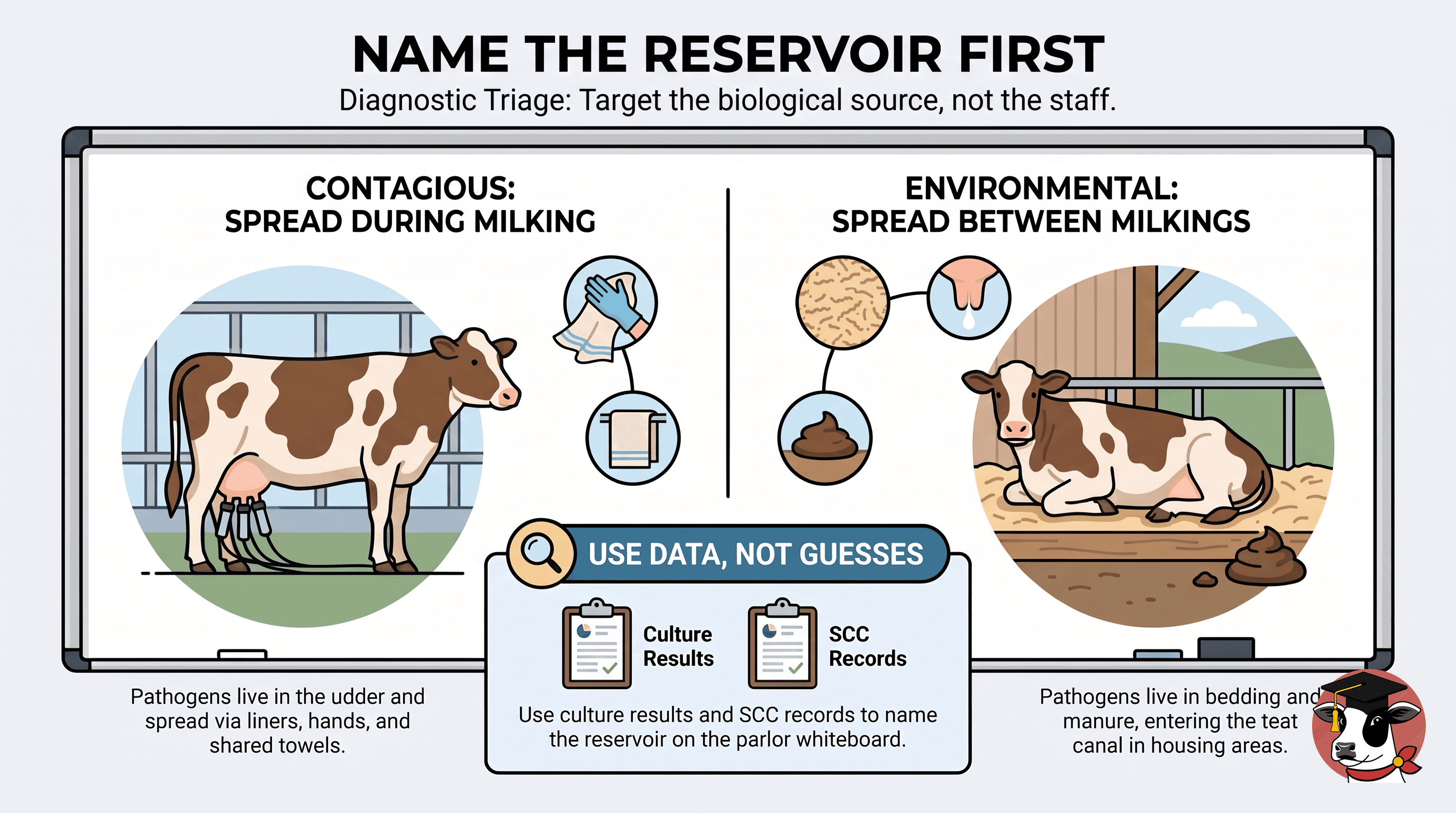
Contagious pattern: Staphylococcus aureus and Streptococcus agalactiae are primarily maintained in infected udders, teat lesions, and infected cows. Spread commonly occurs during milking through liners, hands, towels, and other contaminated equipment. Look for cow-to-cow clustering, repeat infections, rising somatic cell counts, or cases concentrated in the parlor.
Environmental pattern: Coliforms such as E. coli and Klebsiella, plus environmental streptococci including Strep. uberis and Strep. dysgalactiae, are associated with feces, manure, soil, water, and bedding. Risk rises when bedding is wet or heavily soiled and during the post-milking period, when the teat canal is more exposed. Fresh-cow and housing-group clusters should shift attention toward stalls, packs, cleanliness, and the hours after milking.
The split is useful epidemiology—not a moral label. S. uberis and some coliform strains can show mixed or strain-specific behavior, so do not infer the reservoir from the organism's name alone.
Map cases by cow, quarter, time in lactation, milking group, housing, bedding condition, and culture result. Pair clean sampling with routine culture or an evaluated on-farm culture program, and review results with the herd veterinarian. Culture-negative and many Gram-negative cases may be self-limiting, but severe disease still needs prompt veterinary assessment. Use the evidence to target hygiene, equipment, segregation, bedding, and treatment decisions—without guessing at drug doses.
Sources
- Mastitis in Cattle — Merck Veterinary Manual
- Environmental Mastitis — Cornell Animal Health Diagnostic Center
- Mastitis-Causing Pathogens and How They Get on Your Farm — Penn State Extension
- Mastitis in Dairy Cattle — MU Extension
- Contagious vs. Environmental Mastitis — Open PRAIRIE, South Dakota State University
- On-farm culture for mastitis management — PMC
- Mastitis diagnostics review — PMC
- Practical diagnostic review of bovine mastitis — Frontiers in Animal Science