
Hoof Blocks and Off-Loading: Taking Pressure Off the Painful Claw
A hoof block is mechanical off-load for a painful claw-horn lesion — not a spray substitute. Sound-claw selection, placement, and a timed recheck decide whether it helps or harms.
3 min read · 2026-09-14
In this note
- 4 weeks
- 30 days
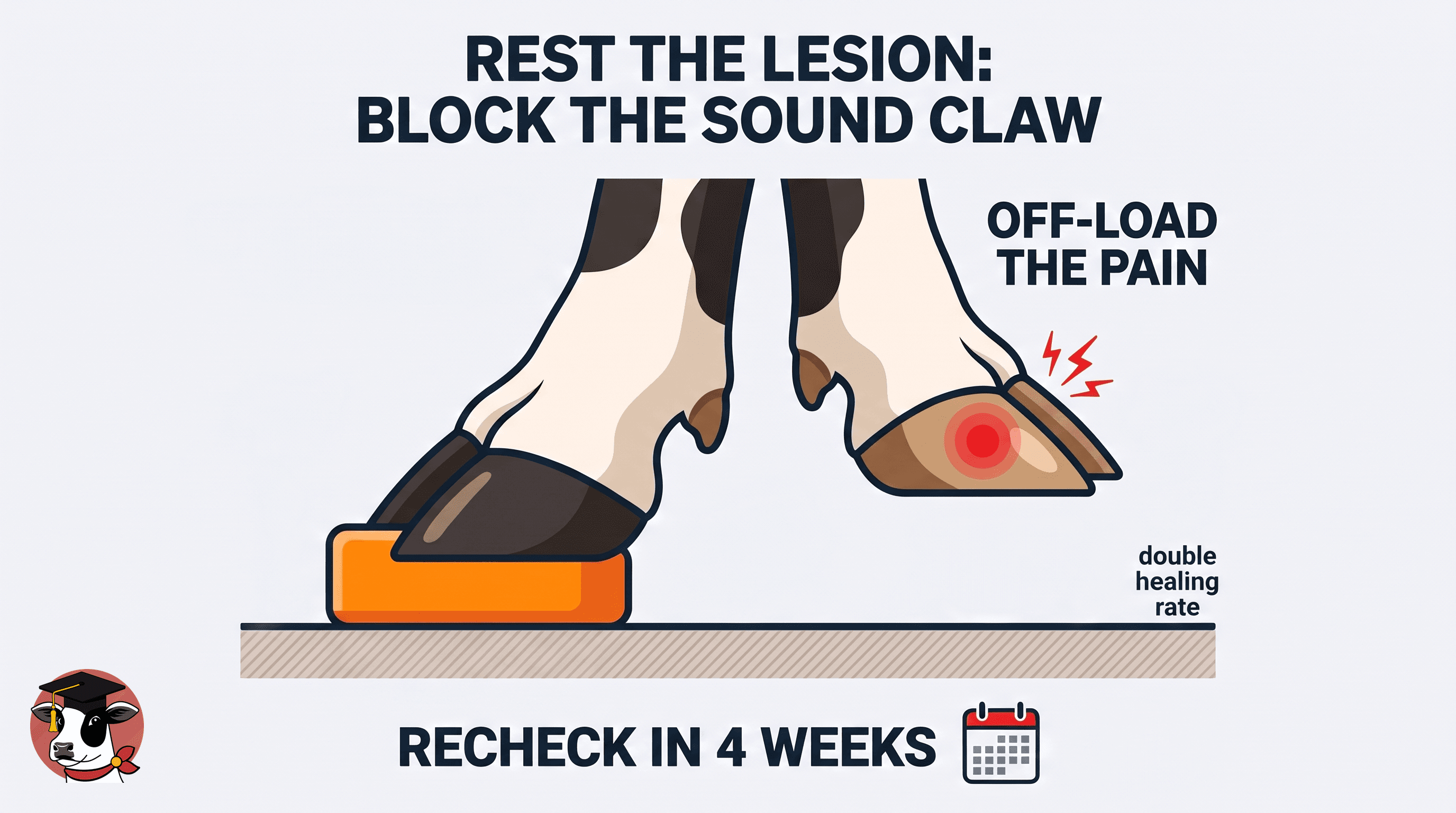
Sole ulcers, sole hemorrhage, and white line disease are mechanical failures of horn and the tissues under the pedal bone. Sprays and wraps do not unload the flexor tuberosity crushing the corium. When therapeutic trimming alone cannot take enough pressure off the lesion, an orthopedic block on the sound claw is the off-load — rest for damaged tissue so new horn can close the defect.
The block goes on the claw that can carry the limb. On most rear feet that means the medial (inner) claw, because the lateral claw takes more concrete load and hosts most claw-horn lesions. Blocking a compromised claw, or both claws, turns a treatment into a new crush injury. Infectious skin disease alone (digital dermatitis, foot rot) is not a block indication — name the tissue first, then decide mechanical vs topical care.
Clean, dry, lightly roughened horn and the right adhesive chemistry keep the block on. Polyurethane glues are often preferred because they cure cooler and faster than some older methyl methacrylate resins — follow product instructions and avoid heat injury on thin sole. Cover the heel support zone without packing hard glue under the axial heel where a new ulcer can start, and keep the block flush so it does not rub the painful claw. Wood often wears sooner — plan a primary recheck around 4 weeks (AABP guidance cites about 30 days); non-wearing polyurethane and hard plastic still need planned removal.
Sound-claw blocking for weight relief is step four in the Dutch five-step method — after functional and therapeutic trim work has shaped the foot, not a shortcut past the knife. Step five is loose-horn removal and a digital dermatitis check. Trials that combined early trim, a sound-claw block, and veterinary-guided NSAID use improved recovery versus trim alone — pain and inflammation care belong with the herd veterinarian, not as a DIY add-on. Every blocked cow needs a planned recheck around 4 weeks (about 30 days per AABP guidance): replace a worn or loose block, remove what no longer belongs, and never leave a non-wearing block on indefinitely (overgrown toe, heel rock-back, tendon strain on the "good" claw).
Check in the barn
What to check after blocking: was the blocked claw confirmed sound before glue went on; does the block cover the heel without glue under the soft heel bulb or axial crush zone; is the cow on a recheck list around 4 weeks (about 30 days) for wood wear versus mandatory plastic/PU removal; and after treatment, is walking distance and standing time reduced while the lesion rests?
Sources
- How to block a lame cow’s foot — AHDB Knowledge Library
- Blocking feet to manage lameness — AHDB
- Sole Ulcer Fact Sheet — American Association of Bovine Practitioners (AABP)
- Evaluation of treatments for claw horn lesions in dairy cows — Thomas HJ, et al., Journal of Dairy Science (2015);98:4477–4486