
CowdemyRumenFIG. 10Applied12 min
Reading silage fermentation
Interpret pH, acids, ammonia, alcohols, yeasts, molds, and aerobic stability as one preservation story—not isolated pass/fail numbers.
ShareReading silage fermentation
Field notes on this focus
Also touches this focus
- Note 01A mold count is not a mycotoxin testViable molds and chemical toxins are different measurements, and patchy contamination challenges both.4 min · 2026-09-17
- Note 02The fermentation report does not end at feed-outA well-preserved sample can still lose dry matter when oxygen, a slow face, or long bunk exposure restarts microbial growth.4 min · 2026-09-17
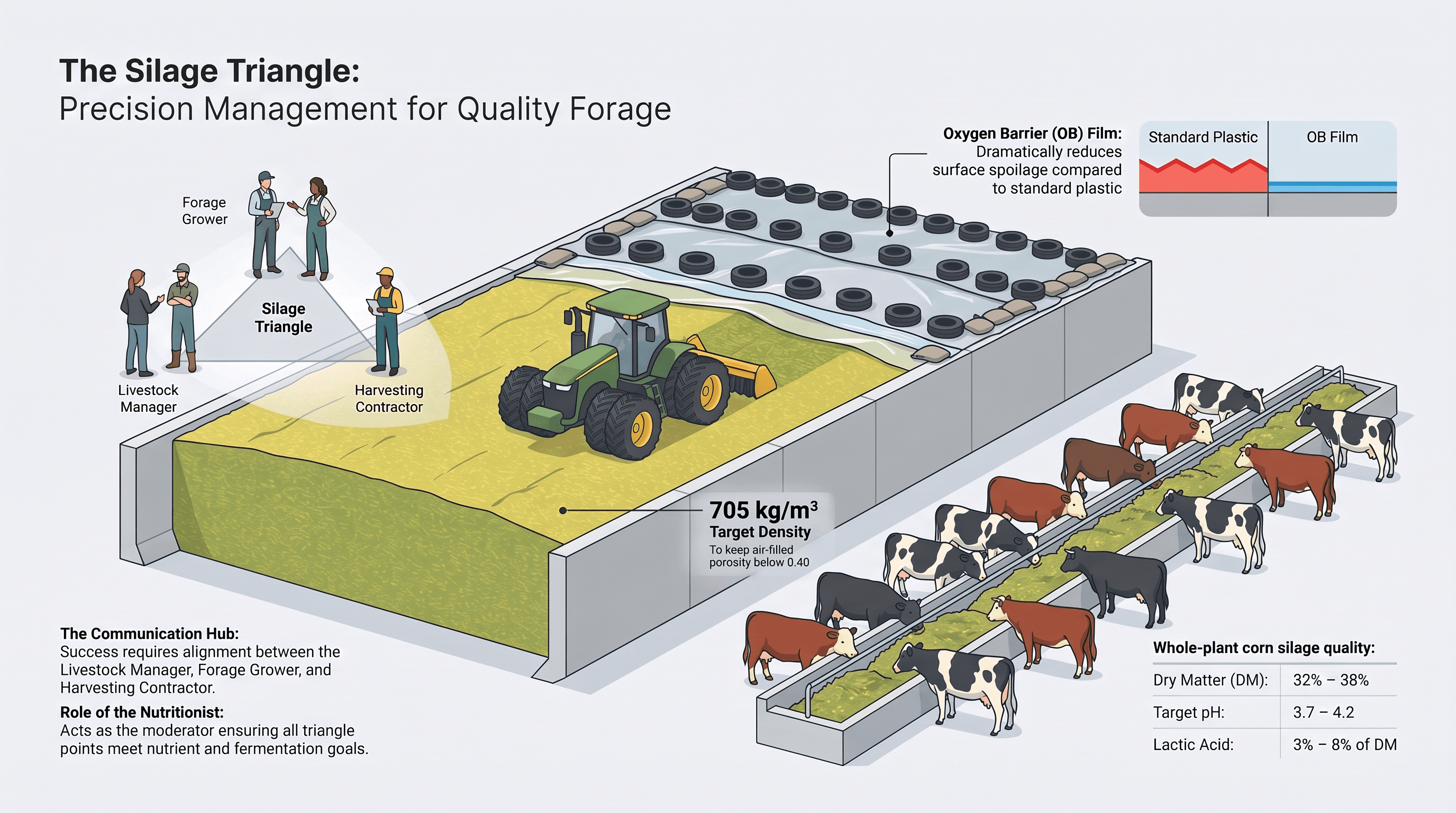
- Note 03Air at the face spoils the packDense packing and oxygen-barrier cover lock fermentation in. A ragged, slow face lets air back in and burns dry matter at the bunk.3 min · 2026-09-09
Sources
- Understanding and Significance of Forage Results — Dairy One Forage Laboratory
- Understanding your forage test results — Oregon State University Extension
- Nutrient Requirements of Dairy Cattle, 8th revised edition — NASEM (2021)
- From Feed to Milk: Understanding Rumen Function — Penn State Extension
Plate credit
Stomach figure adapted from the public-domain 1905 plate Interior of a cow (The Household Physician; Wikimedia Commons) and standard ruminant-stomach teaching figures. Educational only.
Not a veterinary diagnosis, prescription, or ration formula.