
The stall bed is half the teat environment
Between milkings the teat lives on the stall bed. Wet, dirty bedding is a continuous environmental bacterial dose.
Knowledge level in this topic: Intermediate. Barn-side working knowledge in this topic: checks, pairing, and what to do next.
3 min read · 2026-09-09
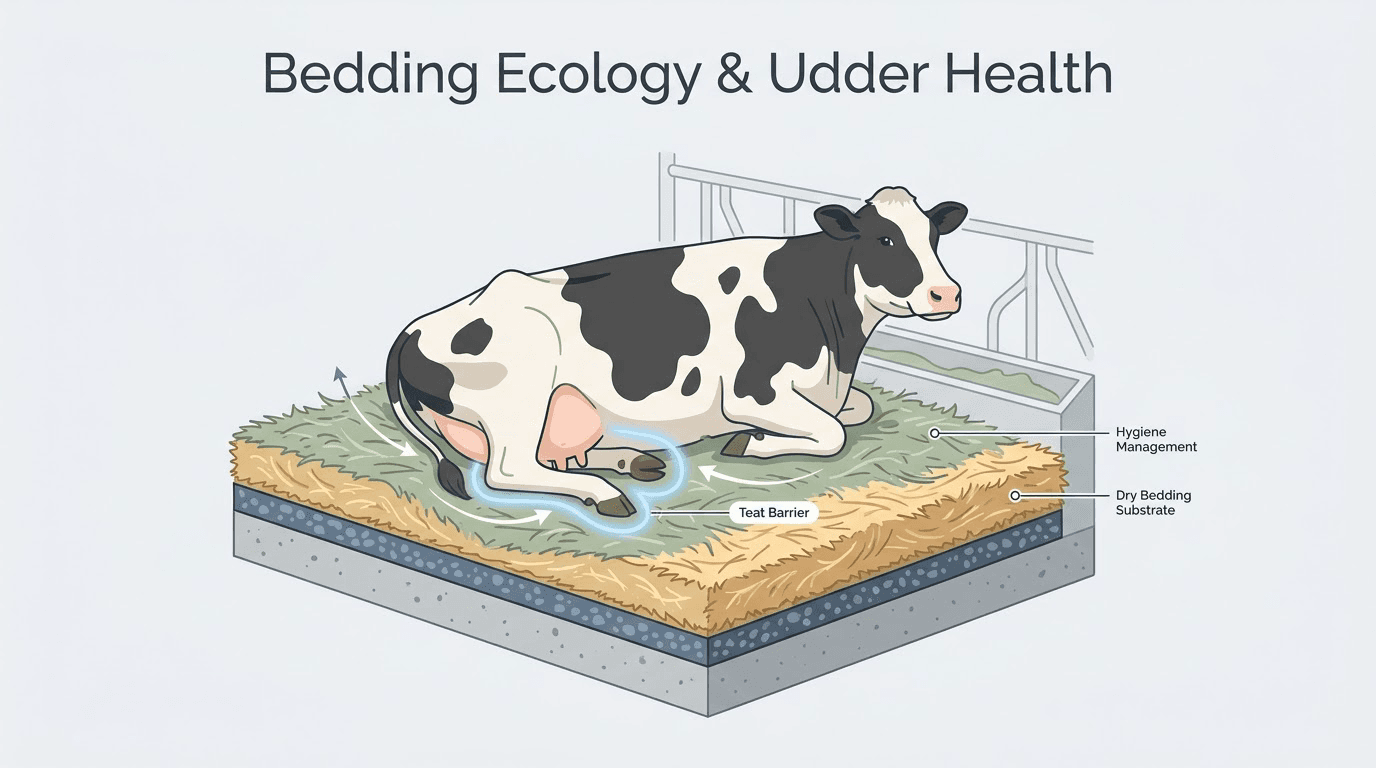
Milking hygiene gets the SOP board. The other half of the day the teat rests against whatever is on the stall bed. That surface (moisture, organic matter, and bacterial load) is the continuous environment of environmental mastitis pathogens between milkings.
Sand, sawdust, straw, and recycled manure solids behave differently for comfort and for bacterial growth, but the shared rule is the same: keep it dry and frequently groomed. Organic beds that stay wet become warm incubators. Inorganic sand can still fail if manure builds up at the rear and the surface turns into a slurry. Depth and cleanliness matter more than the brand on the invoice.
Stall grooming (leveling, removing wet spots, and refreshing the rear) resets the teat's contact zone. A neglected shoulder of wet bedding is a standing invitation for coliforms and other environmental organisms at the teat end.
Post-dip and clean liners matter most when the cow leaves a dirty bed and returns to one. Bedding ecology does not replace milking hygiene; it decides how hard that hygiene has to work. Fresh cows and high-SCC pens often sit in the wettest, most overstocked stalls, exactly where environmental challenge peaks.
Kneel at the rear curb. Is the bed dry under the udder? Are wet spots raked out daily? Do cows leave manure piles that stay until the next day? If gloves come off black and wet after one stall check, the teat already knows.
The stall bed is half the environment of the teat between milkings. Wet, dirty bedding delivers a continuous bacterial challenge. Manage bedding ecology as seriously as the milking routine. Sister notes on this universe cover milking as a transmission machine; the stocking and cow flow universe's build the stall around the rise and stocking density is a time budget notes pick up when wet stalls and overstocked pens steal the same lying minutes. Educational only—not a diagnosis, prescription, or treatment protocol.
Keep reading
View the networkNext
Name the reservoir first
Mastitis control starts with the reservoir: milking-time spread and bedding exposure need different checks, and culture plus records should guide the next move.
Knowledge level in this topic: Basic. First-pass in this topic — useful even if you already know another area well.Sister note · 3 min
Home plate: Udder · Mastitis pathways · Bedding exposure
- Bedding exposureThe stall bedPlaced here
- Milk meters are early alarms — not diagnosesInline fat, protein, and SCC signals can flag rumen or udder trouble early — useful alarms that still need the bunk and the teat before you act.Sister note
- Milking is a transmission machineContagious mastitis hops cow-to-cow on liners, hands, and towels — the parlor is the transit system to the teat canal.Sister note
- Stocking & cow flowStocking is stalls, bunk, lying, lockup, holding, and movement — not one percentage. Those resources fail separately.Bridge → Barn
Mark size is the kind. Color is the atlas area.
- Sheet
- Focus
- Field note
- Udder
- Barn
Sources
- Mastitis in Cattle — Merck Veterinary Manual