
The DCAD sweet spot
Prepartum DCAD is a calcium-readiness tool — moderate negative targets help; extremes buy little calcium and more acid load.
Knowledge level in this topic: Advanced. Mechanism and stacked risk in this topic — assumes the first-pass frame.
3 min read · 2026-09-09
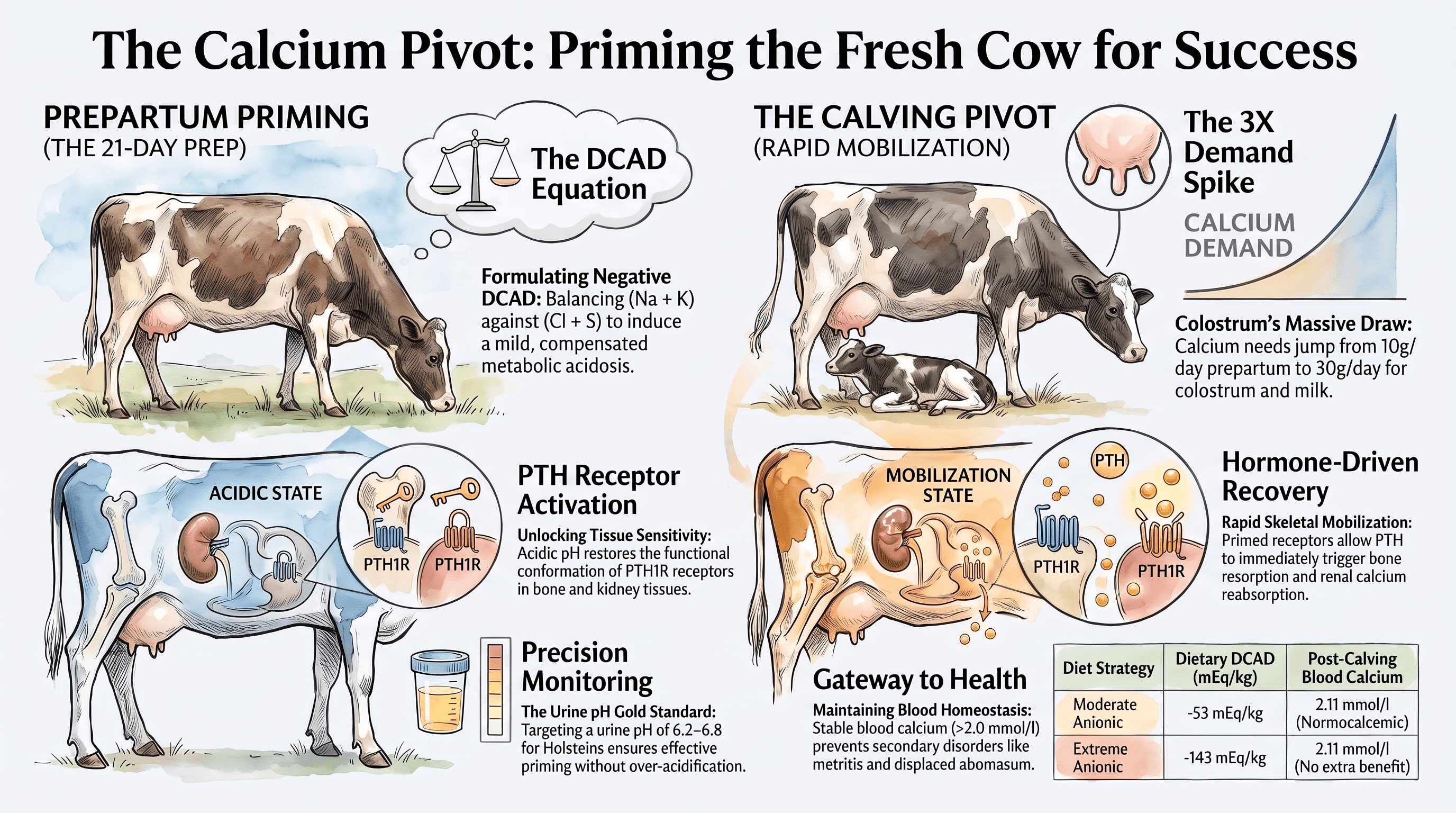
Colostrum and early milk pull calcium hard. If gut absorption and bone mobilization cannot keep pace in the hours around calving, blood calcium falls. Clinical milk fever is the dramatic end of that story; subclinical hypocalcemia is the quiet, common one that still costs muscle strength, intake, and transition disease risk.
Dietary cation-anion difference (DCAD) in the close-up diet is one lever nutritionists use to prepare that calcium system. A controlled negative DCAD can increase tissue responsiveness to parathyroid hormone (PTH), helping the cow mobilize calcium when demand spikes. Extension programs often monitor urine pH as a practical check that the diet is creating the intended acid-base shift — not as a parlor diagnosis by itself.
Pushing DCAD into an extreme negative range does not automatically buy more calcium protection. Over-acidifying the close-up cow can add metabolic cost with little extra calcium benefit. The practical frame is a sweet spot: negative enough to prime calcium homeostasis, not so negative that the cow pays an acidosis bill for no gain.
Exact diet numbers belong with the herd nutritionist and local forage mineral assays. The field lesson is directional: calcium readiness is not “more anion is always better.” Sister notes on this universe already cover when the fresh cow’s energy gap widens, the heifer who never owned a stall at 120% stocking, and why intake comes before the next additive. Pair DCAD design with those transition basics: bunk access, comfort, and a close-up pen that lets cows eat. Educational only—not a diagnosis, prescription, or ration formula.
Keep reading
View the networkNext
Dry period is recovery time
A controlled dry period plus close-up bunk access is mammary recovery time — not an empty parking lot before calving.
Knowledge level in this topic: Intermediate. Barn-side working knowledge in this topic: checks, pairing, and what to do next.Sister note · 3 min
Home plate: Transition · The transition cow · Calcium adaptation
- Calcium adaptationThe other gapPlaced here
- When the fresh cow’s energy gap widensAfter calving, milk demand rises faster than intake — the gap is where ketone risk lives.Sister note
- Intake before the next additiveTransition-cow intake is the first ration to protect: a heating TMR lowers the nutrients she can actually consume.Sister note
Mark size is the kind. Color is the atlas area.
- Focus
- Field note
- Transition
Sources
- Negative DCAD Diets for Milk Fever Prevention in Dairy Cattle — UW–Madison Extension Dairy
- Parturient Paresis in Cows — Merck Veterinary Manual
- Prevention and Treatment of Milk Fever — University of Minnesota Extension