
Milk meters are early alarms — not diagnoses
Inline fat, protein, and SCC signals can flag rumen or udder trouble early — useful alarms that still need the bunk and the teat before you act.
3 min read · 2026-09-09
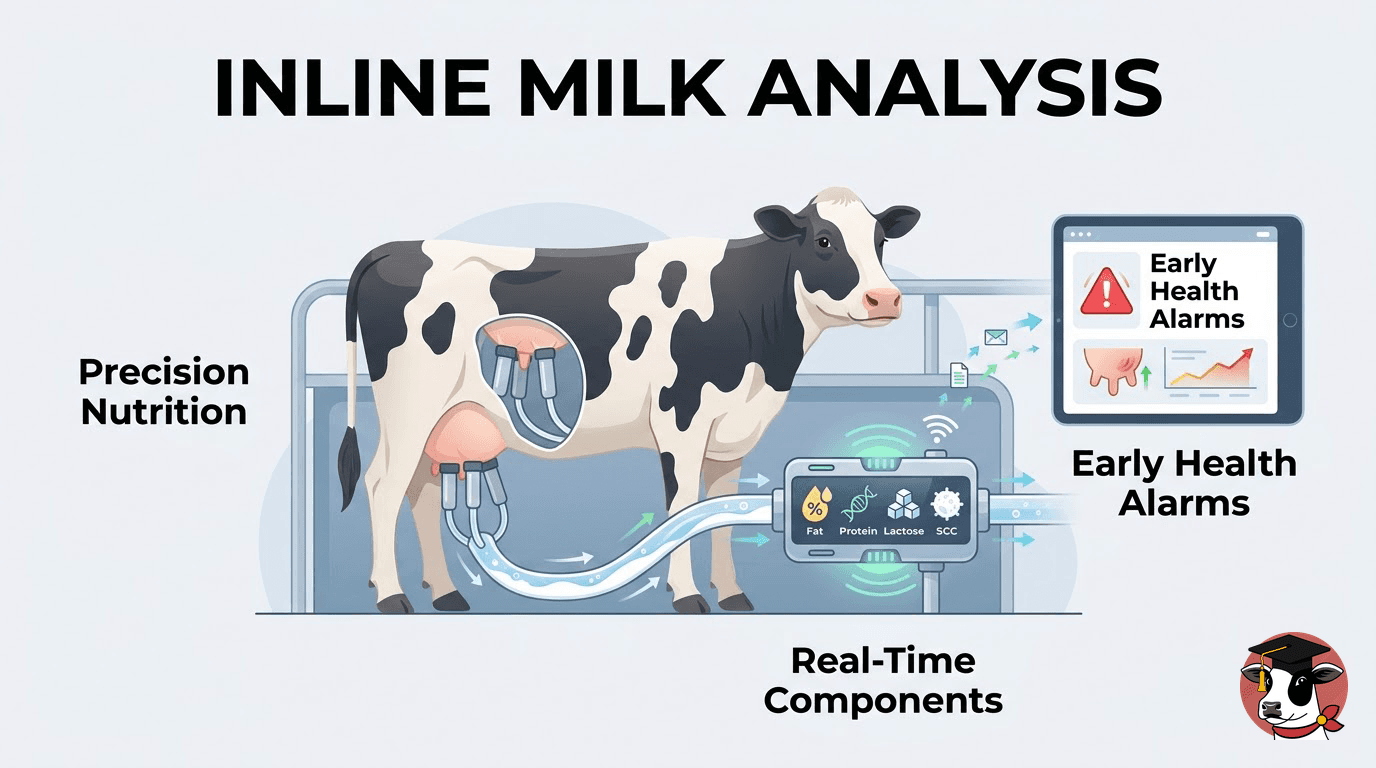
What leaves the udder is a daily report. Inline milk meters and sensors that estimate fat, protein, and SCC (or conductivity proxies) shrink the lag between “something changed” and “someone looked.” They do not replace culture, a veterinarian, or a walk of the pen.
Sudden fat slips or fat:protein shifts often track back to starch load, peNDF, sorting, or empty bunks — the same story as milk fat depression and the mixer/push-up notes. Treat a meter trend as a prompt to check the bunk and the manure, not as proof of a named disease.
Spikes in SCC or conductivity can flag inflammatory or infection risk earlier than the tank average. Contagious and environmental paths still matter: milking hygiene and bedding ecology decide how often those alarms fire. Confirm with cow-side signs and your veterinarian before labeling a cow.
Pair morning meter alerts with bunk emptiness, teat-end condition, and stall wetness. How many alerts cleared after a walk with no treatment? If the list grows while the parlor and beds look fine, check sensor calibration before rewriting the SOP.
Sister notes on this universe cover milking as a transmission machine and why the stall bed is half the teat environment; the inside-the-rumen universe’s the-sensor-is-a-barn-alarm-not-a-diagnosis and milk-fat-depression notes pick up when rumen shifts show up in the tank. Educational only — not a diagnosis, prescription, or treatment protocol.
Sources
- Mastitis in Cattle — Merck Veterinary Manual
- Recommended Mastitis Control Program — National Mastitis Council