
Reading milk fat as a rumen alarm
A falling fat test is often the first cheap signal that fermentation has shifted, not that the cow forgot how to make fat.
3 min read · 2026-09-07
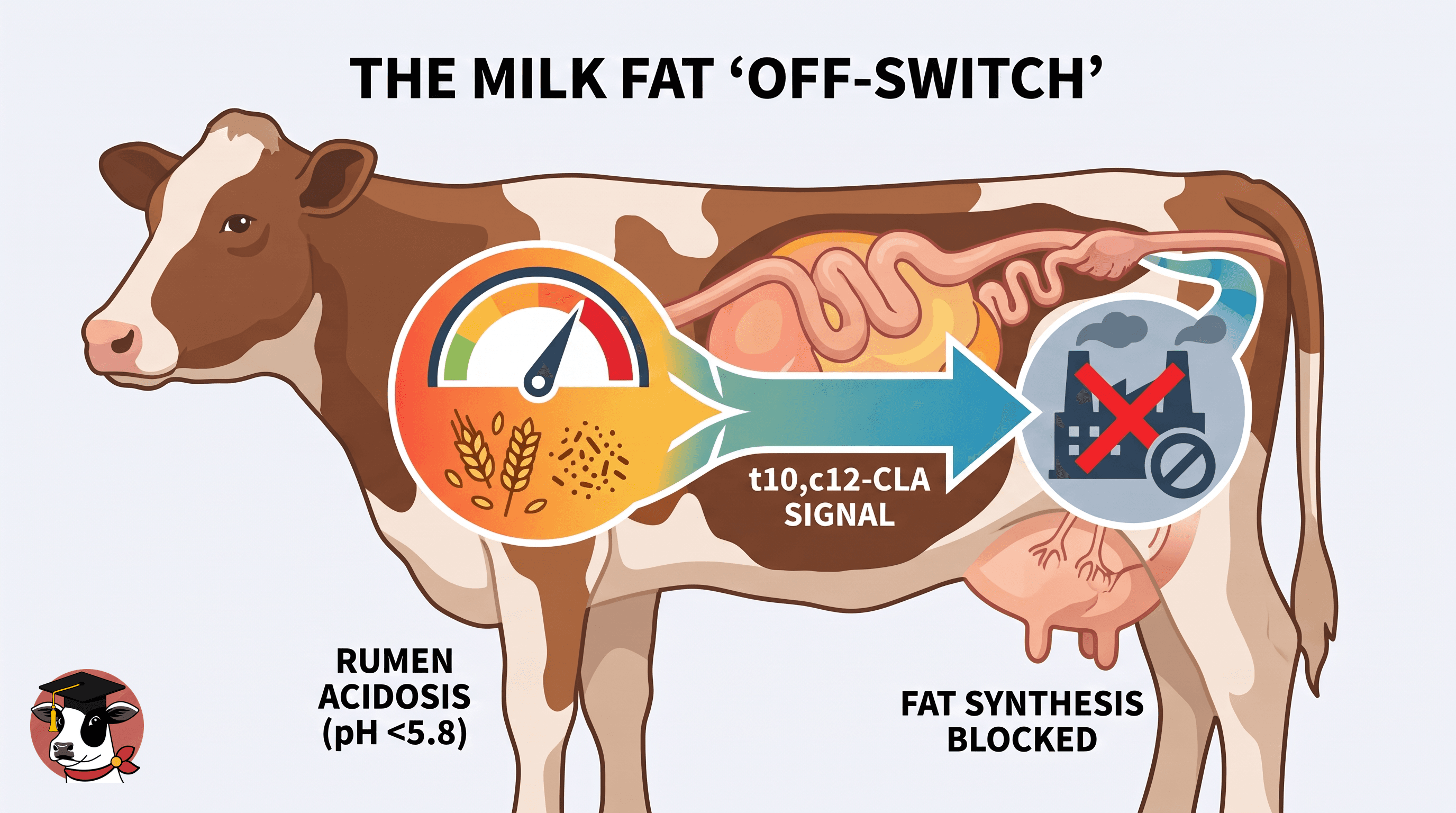
Milk fat is made in the udder. For the de novo fraction, the mammary gland leans on rumen-derived precursors — acetate from fiber fermentation, and BHBA that comes largely from butyrate. That is not the whole story of a falling fat test. Diet-induced milk fat depression is driven more by altered rumen biohydrogenation of polyunsaturated fatty acids (PUFA) than by a simple starch-driven acetate shortage. Under a stacked risk load — fermentable starch, low physically effective fiber, and unsaturated fatty acids (UFA) — rumen microbes can shift from the usual pathway toward intermediates such as *trans*-10,*cis*-12 CLA, which suppress mammary fat synthesis.
Do not treat one test as a diagnosis. Breed, days in milk, and diet fat supplements all change the number. The useful habit is to watch the herd trend against your own baseline, then walk the bunk, the cud, and the manure on the same day.
A fat drop with loose manure and quiet rumination is a rumen story until proven otherwise. A fat drop with no other change may be a sampling or supplement story. Open the rumen risk stack before you rewrite the chemistry.
Sources
- From Feed to Milk: Understanding Rumen Function — Penn State Extension
- Troubleshooting Problems with Low Milk Fat and Milk Protein — Penn State Extension
- Troubleshooting Milk Fat Depression, Key Questions to Ask — University of Wisconsin Extension
- Nutrient Requirements of Dairy Cattle, 8th revised edition — NASEM (2021)
- Nutritional regulation of milk fat synthesis (biohydrogenation theory review) — Bauman & Griinari (2003)