
The fresh pen was stocked at 120%
Calving went well; in the fresh pen, 96 cows competed for 80 headlocks, and first-lactation cows paid in lost bunk access and intake.
4 min read · 2026-09-07
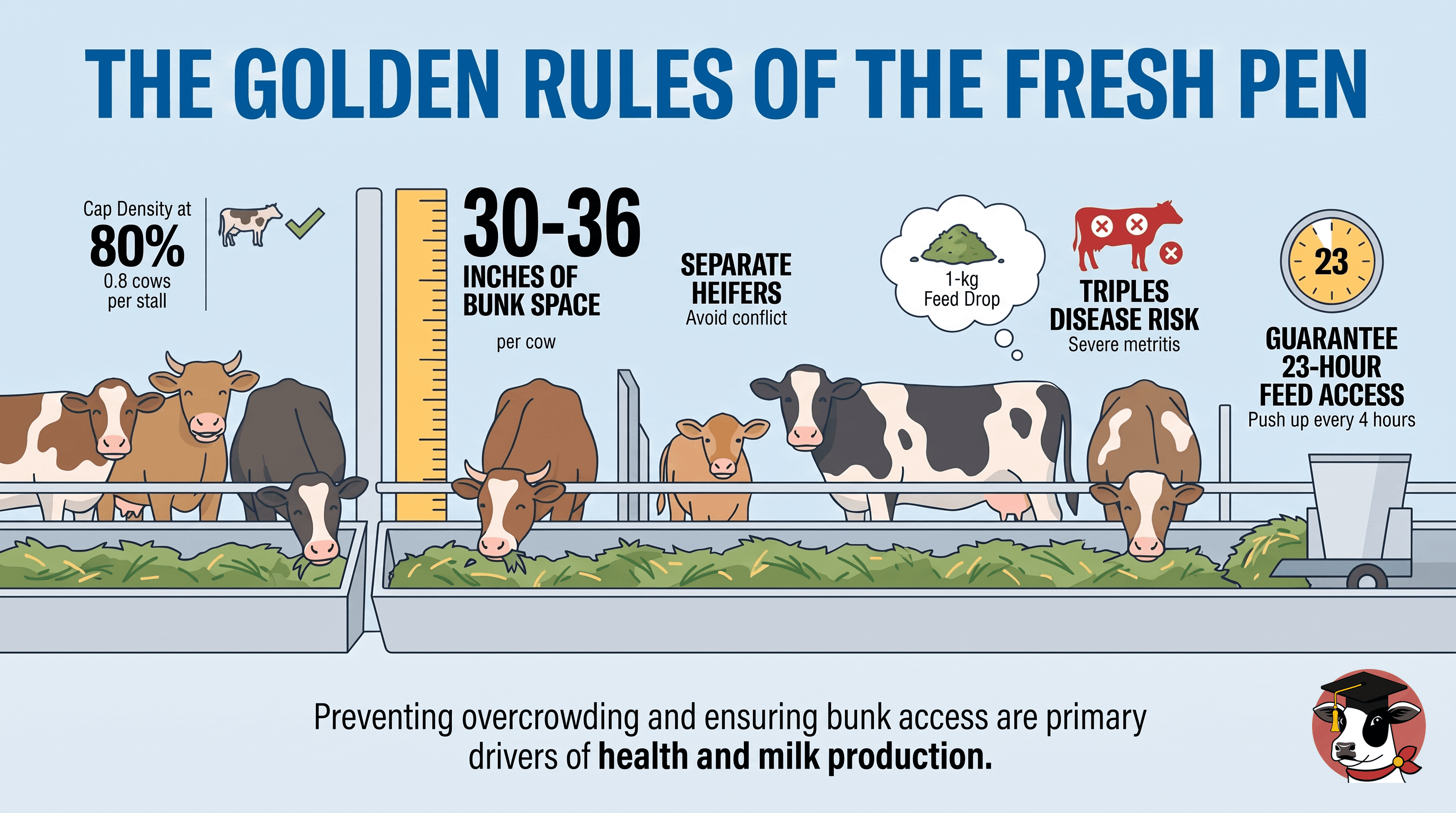
A 700-cow herd had a clean maternity area but an overcrowded fresh group: 96 cows for 80 headlocks. Older cows displaced first-lactation animals, which ate late or skipped meals. Penn State's transition guidance puts feed intake at the center of metabolic success; Dairyland Initiative guidance emphasizes adequate bunk space and avoiding excessive transition-pen stocking. Reduced intake deepens negative energy balance and raises ketosis risk; low intake and feeding time are also associated with impaired immune function and postpartum uterine disease, but crowding alone does not prove causation.
The herd split a late-fresh group and kept the true fresh pen below capacity. Heifer intake improved within a week. Uterine cases lagged because involution and inflammatory recovery take weeks, not hours. New calvings stopped repeating the same pattern. The practical lesson is simple: fix access to feed and rest before interpreting treatment counts. Disease assessment and treatment remain veterinary decisions. Educational only — not a diagnosis, prescription, or treatment protocol.
Sources
- Maximizing Feed Intake: Key for Transition Cow Success — Penn State Extension
- Transition Cow Housing — UW Dairyland Initiative
- Stocking Density — UW Dairyland Initiative
- Prepartum behavior and differential susceptibility to metritis in dairy cows — Huzzey et al.
- Metritis biomarkers in dairy cattle — PubMed
- Postpartum uterine disease in dairy cattle — PMC
- Uterine involution in dairy cattle — Animals (MDPI)