
MP is not crude protein
Crude protein counts nitrogen. Metabolizable protein asks what amino acids actually reach the cow after the rumen.
3 min read · 2026-09-09
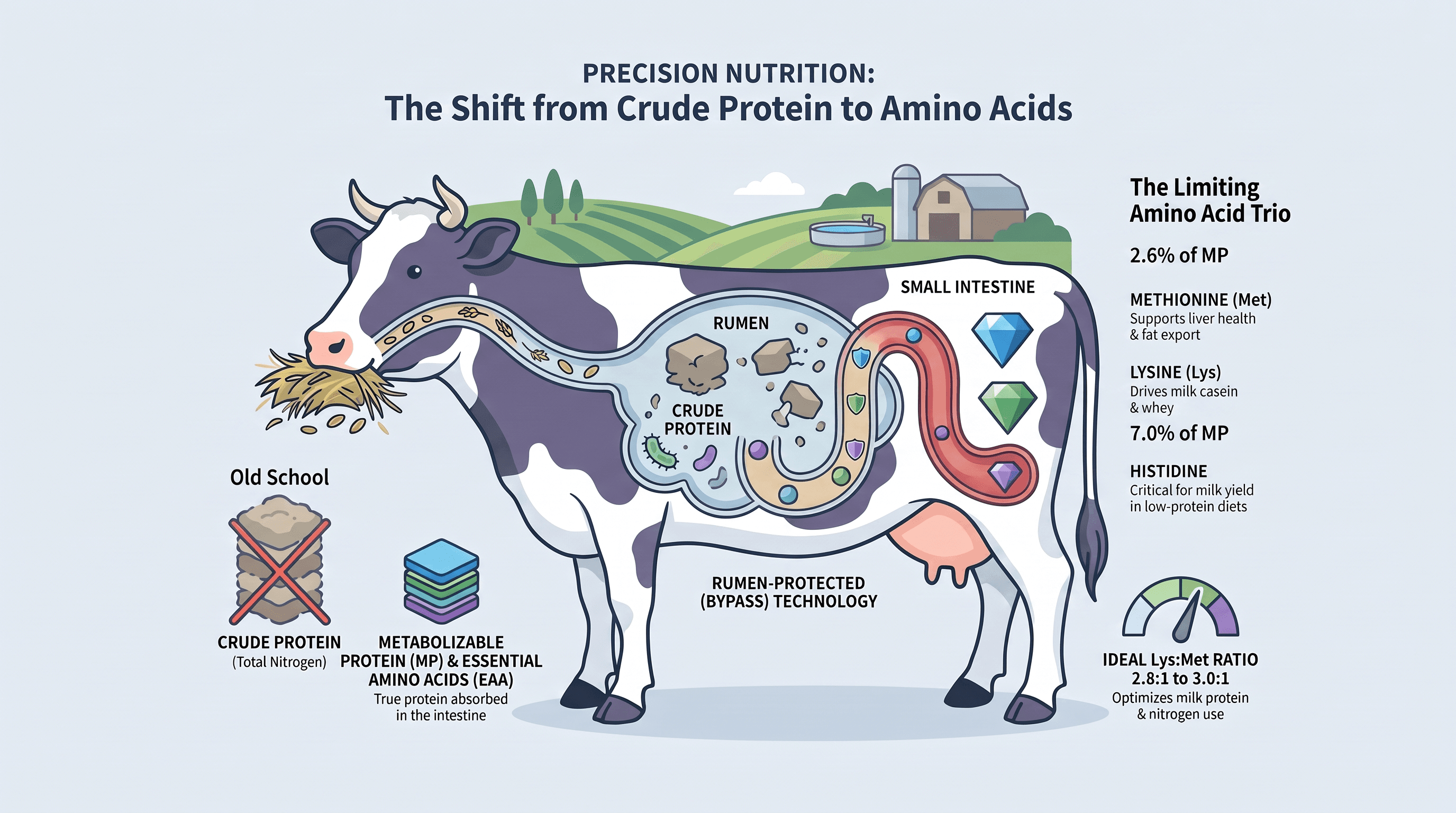
Crude protein is a convenient lab number: nitrogen × 6.25. It does not tell you how much true protein the cow absorbs after rumen microbes and bypass protein finish their work. That absorbed supply is closer to what nutritionists call metabolizable protein (MP) — and the amino acid profile of that MP is what builds milk protein.
Much of dietary protein is broken down in the rumen. Microbes rebuild amino acids into microbial protein, which later digests in the small intestine. Some feed protein escapes (“bypass”) and also contributes amino acids downstream. The cow’s usable amino acid pool is the sum of those streams — not the crude protein on the tag.
When diets are short on key essential amino acids relative to MP — lysine and methionine are the usual first limits in many North American dairy diets, and histidine can be co-limiting — milk protein yield and nitrogen efficiency suffer even if crude protein looks “high enough.” NASEM (2021) moves the conversation toward essential amino acid supply and response, not a single CP finish line.
Exact MP and amino acid targets belong with the herd nutritionist and the model they use. The atlas lesson is directional: stop treating crude protein as the finish line. Ask whether the rumen is fed for microbial protein, whether bypass protein is intentional, and whether Lys/Met (and sometimes His) balance is part of the conversation.
Keep reading
View the networkNext
Particle size holds the fiber mat
If the TMR is too fine, the forage raft thins — less trapping, less re-chewing, less bicarbonate-rich saliva.
Same sheet · 3 min
Home plate: Rumen · Inside the rumen · What leaves the rumen
- What leaves the rumenDownstreamPlaced here
- Reading milk fat as a rumen alarmA falling fat test is often the first cheap signal that fermentation has shifted, not that the cow forgot how to make fat.Same sheet
- Air at the face spoils the packDense packing and oxygen-barrier cover lock fermentation in. A ragged, slow face lets air back in and burns dry matter at the bunk.Same sheet
Mark size is the kind. Color is the atlas area.
- Focus
- Field note
- Rumen
Sources
- Nutrient Requirements of Dairy Cattle, 8th revised edition — National Academies (NASEM, 2021)
- What's New in the NRC for How We Formulate for Protein in Diets for Dairy Cattle? — Schwab, C.G., Tri-State Dairy Nutrition Conference