
A rising fetch list is a time-budget failure
Robots succeed when cows choose the box and still get 12–14 hours lying. A climbing fetch list means the barn is stealing that time.
Knowledge level in this topic: Intermediate. Barn-side working knowledge in this topic: checks, pairing, and what to do next.
3 min read · 2026-09-09
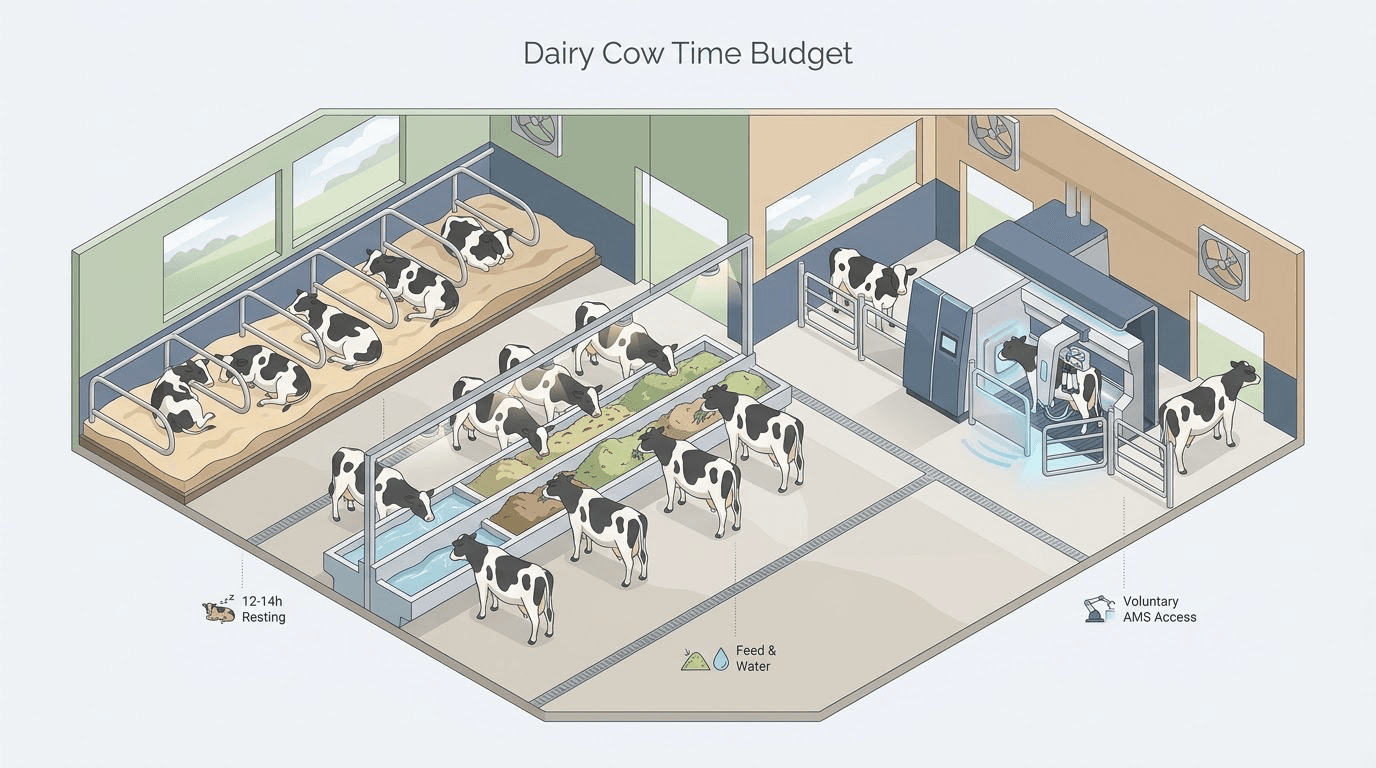
An AMS barn sells voluntary milking. What it actually sells is a time budget: rest, feed, water, and visits to the box without turning the robot into a parlor lock-up by another name. When the fetch list climbs, standing time rises and lying time falls — the same standing "dose" that shows up later as claw-horn risk.
Healthy AMS flow is mostly cows choosing the box because feed, traffic, and training make the trip worthwhile. Guided or free-flow layouts both work when stocking near the robot is honest and dead-ends do not trap subordinates. The warning light is not milk per robot alone — it is how many cows must be fetched, how long they wait at gates, and whether high producers still rest 12–14 hours.
Fetching is sometimes necessary. A rising, sticky fetch list is management debt: lame cows, fresh cows, empty bunks, blocked alleys, or robot availability that no longer matches the pen. Every forced trip adds minutes on concrete and minutes away from the stall — a stocking and cow-flow failure wearing a technology badge.
Track fetch numbers by pen for a week alongside lying/rumination if you have sensors. Watch the commitment pen and return alley for idle standing. If fetch work expands while stalls sit empty mid-day, fix traffic, feed push-ups, and cow readiness before adding another robot on paper.
A rising fetch list is a time-budget failure. Robots work when cows choose the box while preserving 12–14 hours of lying time. Sister notes on this universe cover stocking density as a time budget and build the stall around the rise; the lameness universe's standing time is the dose note picks up when concrete hours load the corium. Educational only—not a diagnosis, prescription, or facility blueprint.
Keep reading
View the networkNext
Build the stall around the rise
High-producing cows need 12–14 hours lying. A stall that blocks the rise charges that time back as standing, collisions, and lesions.
Knowledge level in this topic: Intermediate. Barn-side working knowledge in this topic: checks, pairing, and what to do next.Sister note · 3 min
Home plate: Barn · Stocking & cow flow · Robot flow
- Robot flowVoluntary milkingPlaced here
- Stocking density is a time budgetOverstocking steals lying and eating time. Manage stalls, bunk, and flow, not headcount alone.Sister note
- Hidden stocking is lockup plus holdThe stall sheet said 100%. The cows stood from breakfast through the second parlor turn.Same publisher
- Standing timeThe doseBridge → Hoof
Mark size is the kind. Color is the atlas area.
- Focus
- Field note
- Hoof
- Barn
Sources
- Stocking Density — UW Dairyland Initiative
- Transition Cow Housing — UW Dairyland Initiative